










The word boundaries is everywhere these days—on social media, in the workplace, in the home. Even in the therapy room, it’s become one of the most used, and misunderstood, terms in our clinical vocabulary, often confused with rules, demands, ultimatums, and even simple preferences.
In this keynote conversation, world-renowned relationship expert Alexandra Solomon sits down with two of the field’s leading voices on boundaries: Nedra Glover Tawwab, New York Times bestselling author of Set Boundaries, Find Peace, and Terri Cole, author of Boundary Boss.
Together, they’ll move beyond surface-level advice to examine what’s required for boundaries to be effective: the courage to set them, the humility to receive them, and the recognition that a boundary isn’t truly real until it’s been made real between two people. They’ll also explore how power, gender, and culture shape whose limits get respected, how high-functioning clients can become “boundary bullies” without knowing it, and how clinicians’ own unexamined boundary struggles show up in the therapy room.
This panel will offer therapists a more relational, less formulaic way to help clients tell the difference between what protects them and what merely distances them.
George Faller, LMFT, is a couples and family therapist, trainer, and host of the podcast Brave Love/ Great Sex, which has over 15 million downloads. His latest book is Brave Love/ Great Sex, co-authored with Laurie Watson.
Leanne Campbell, PhD, is a couples and individual therapist, trainer, co-developer of Emotionally Focused Individual Therapy (EFIT) and co-author with Susan Johnson of EFT for Trauma and A Primer for EFIT, which has been translated into over 10 languages.
When clients can’t access secure connection, their relationship suffers. Unmet needs drive anxiety, conflict, and loneliness. But what if you could leverage your clients’ longing for emotional and physical connection as fuel to activate powerful pleasure centers in their brain? Huge dopaminergic shifts aren’t limited to sex, drugs, and rock and roll—they can also get activated during experiences of secure attachment. In therapy spaces everywhere, when clients’ longing for connection is finally met with secure attachment, it unleashes the power of co-regulation, resulting in transformative, euphoric experiences. In this workshop, videos from actual client sessions, clinical commentary, and Emotionally Focused Therapy’s attachment-based framework will give you a map for connecting your client’s unmet longings to the caregiving, intimacy, and emotional accessibility they’re seeking. You’ll learn to:
Sabrina N’Diaye, PhD, LCSW-C, MDiv, is an integrative psychotherapist, storyteller, and peacebuilder, based in Baltimore, MD. Her first book is Big Mama Speaks: Love Lessons from a Harlem River Swan.
In an era of burnout, over-medicalization, and increasing emotional disconnection, many therapists are longing to reconnect with what first called them to this work and the tools they bring to therapy beyond theory and technique—the art of presence, imagination, intuition, story, ritual, and deep human connection. In this highly experiential workshop, you’ll explore therapy as both a clinical practice and a sacred craft. Drawing from mind-body medicine, guided imagery, narrative healing, contemplative practice, expressive writing, and interpersonal neurobiology, you’ll experience how healing unfolds through attunement, embodiment, creativity, and meaning-making. You’ll deepen your understanding of therapeutic presence while learning practical interventions that can be integrated into trauma-informed psychotherapy with diverse populations. In the end, you’ll leave feeling renewed, grounded, and reconnected to the heart of your clinical work, with concrete tools to foster healing, resilience, authenticity, and emotional integration in both clients and yourself. You’ll discover:
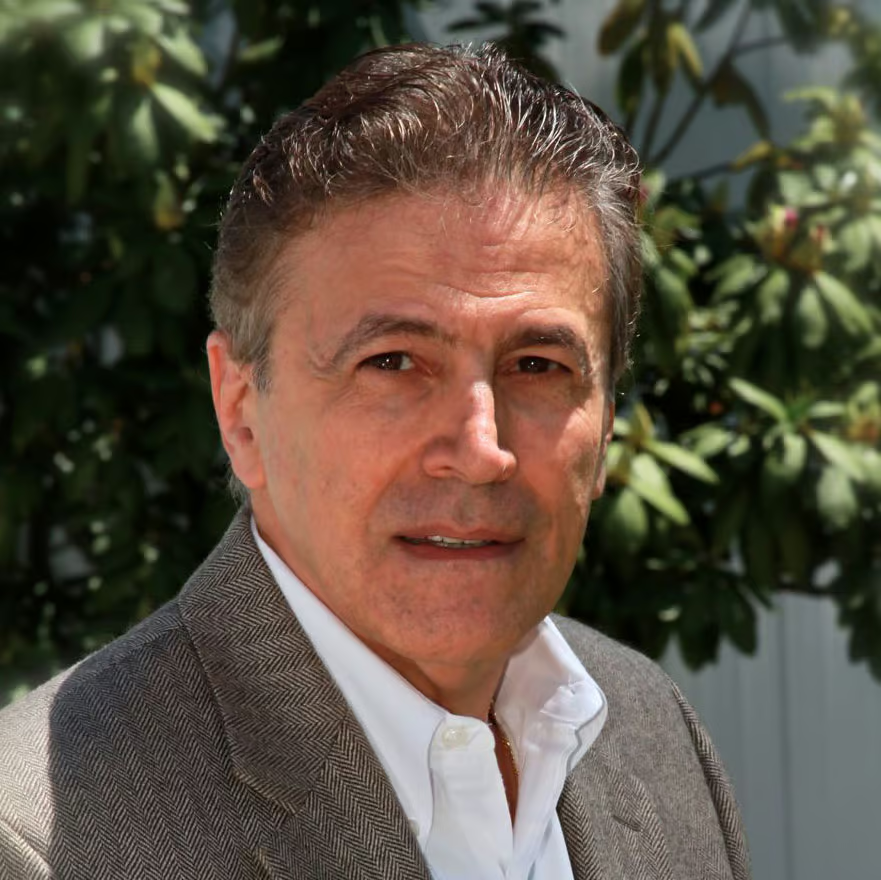
David Grand, PhD, is the developer of Brainspotting and the author of Brainspotting: The Revolutionary New Therapy for Rapid and Effective Change, as well as the coauthor of This is Your Brain on Sports. He’s an international lecturer and trainer, and his work has been featured in The New York Times, Sports Illustrated, Esquire Magazine, and Forbes, as well as on NBC News, The Discovery Channel, CNN, MSNBC, and Sirius Radio.
There's a new challenge facing today's therapist. Neuroscience keeps revealing that the human nervous system is more complex than we ever realized. So how do you treat a system no one fully understands?
David Grand's answer is Brainspotting, a trauma treatment that uses eye position to help clients locate and process stress and trauma held in the nonverbal, noncognitive layers of experience. Early research shows promising reductions in trauma-related distress. And the method rests on a principle every trauma therapist will recognize: when you can't know everything happening inside a client's nervous system, the frame you build together holds the work.
In this workshop from the developer of Brainspotting, you'll learn how the method works, why relational attunement sits at its center, and how the Neuroexperiential Model offers a developmental and neurological lens on human suffering. You'll also discover:
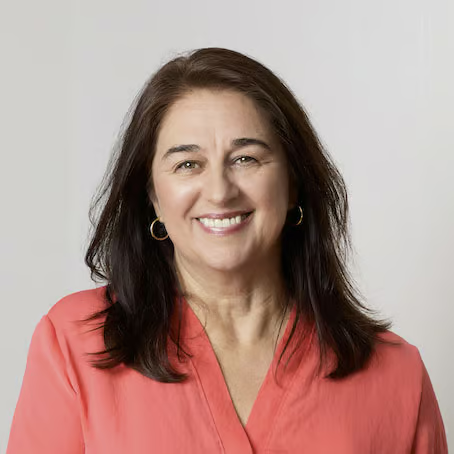
Manuela Mischke-Reeds, MA, LMFT, CHT, is a somatic psychotherapist, international teacher of Somatic Psychology, founder of Embodywise, and co-director of Hakomi California. She integrates Hakomi Mindful Somatic Psychotherapy, Somatic trauma therapies, embodied mindfulness practices, and movement therapies. She's also the founder of ISITTA Trauma Therapy Training and author of several books, including 125 Somatic Psychotherapy tools for Trauma and Stress.
Trauma isn’t in the past. It’s in the unfinished present, manifesting as disconnection, avoidance, agitation, and the limiting core beliefs that shape our choices and the quality of our relationships. And it moves through generations, culture, and history, landing as unspoken somatic imprints in the body. At the center of Hakomi sits a paradox that’s also an invitation: to be fully with a client's unfolding process while following the body's precise indications of what needs to be resolved. The therapist's capacity to rest in a paradoxical field between protection and somatic opening, between the trauma wound and the wisdom it carries, grows the client’s capacity to hold complexity. In this experiential workshop, you’ll gain a clear understanding of Hakomi as well as a felt sense of the method in action. You’ll learn how to:
Luis Mojica is a somatic educator and nutritionist. He's the bestselling author of Food Therapy: Conscious Eating to Navigate Anxiety, Stress, and Trauma. He's the founder of Holistic Life Navigation, an education company that annually serves tens of thousands of people all over the globe through webinars, online courses, and in-person retreats. He also releases weekly content to a collective audience of over 350,000 people via YouTube, Instagram, Facebook, and his popular Holistic Life Navigation podcast.
Kate Truitt, PhD, MBA, is a clinical psychologist, applied neuroscientist, traumatologist, and international educator whose work focuses on trauma, chronic stress, grief, resilience, and neuroplastic change. She's the creator of the NeuroTriad Model, a framework that translates affective neuroscience, psychophysiology, interoception, and experience-dependent neuroplasticity into practical clinical care. She's the founder and CEO of the award-winning clinical practice Dr. Kate Truitt & Associates and the Executive Director of the Amy Research Foundation, a 501(c)(3) nonprofit organization, and the Truitt Institute. She's the international bestselling author of Healing in Your Hands, Keep Breathing, and The Brain Partnership Toolbox for Addiction, Mental Health, and Trauma Treatment Professionals.
Food is rarely just about food. For many clients, it’s a nervous system solution to chronic dysregulation. After a hard conversation, one client might reach for sugar, whereas another might use restriction, grazing, caffeine, or ritualized food rules to cope. Whatever the case, food offers a sense of control over chaos, a path back to embodied pleasure, and a temporary escape from overwhelming feelings like anxiety and shame. This workshop isn’t about eliminating comfort, controlling food, or increasing discipline. It’s about learning to work with food-related patterns without reducing clients to eating behaviors, pathology, or willpower. Once you explore how food, trauma, and survival get linked in the nervous system, you’ll discover how to help clients build more flexible relationships with food by tracking their own body signals. You’ll learn to:
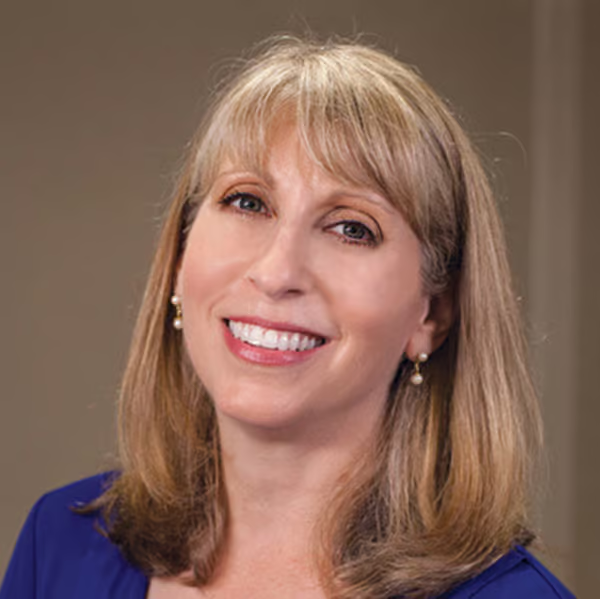
Lisa Ferentz, LCSW-C, DAPA, is a recognized expert in the strengths-based, de-pathologized treatment of trauma and has been in private practice for more than 42 years. She’s a clinical consultant to practitioners and mental health agencies in the United States, Canada, the UK, Itay, Spain, Israel, South Korea, Australia and Ireland. She’s the author of Treating Self-Destructive Behaviors in Trauma Survivors: A Clinician’s Guide, 2nd Edition, Letting Go of Self-Destructive Behaviors: A Workbook of Hope and Healing, and Finding Your Ruby Slippers: Transformative Life Lessons from the Therapist’s Couch.
As clinicians working with trauma, abuse, neglect, and addiction, we absorb more than we realize. Our clients, too, are often exposed to vicarious trauma through caregiving, toxic relationships, and painful intergenerational patterns. Left unaddressed, the weight of secondhand pain erodes our well-being by replacing curiosity with burnout and connection with emotional distance. This workshop will help you spot six telltale signs of vicarious trauma and recognize risk factors that can lead to it in both you and your clients. For therapists, in particular, not attending to our own vicarious trauma erodes the care we offer in ways we may not notice until the damage is done. Through explorations in journaling, drawing prompts, cognitive reframing, breath work, and somatic resourcing, you’ll build a toolkit for cultivating inner safety and self-compassion. You’ll learn to:
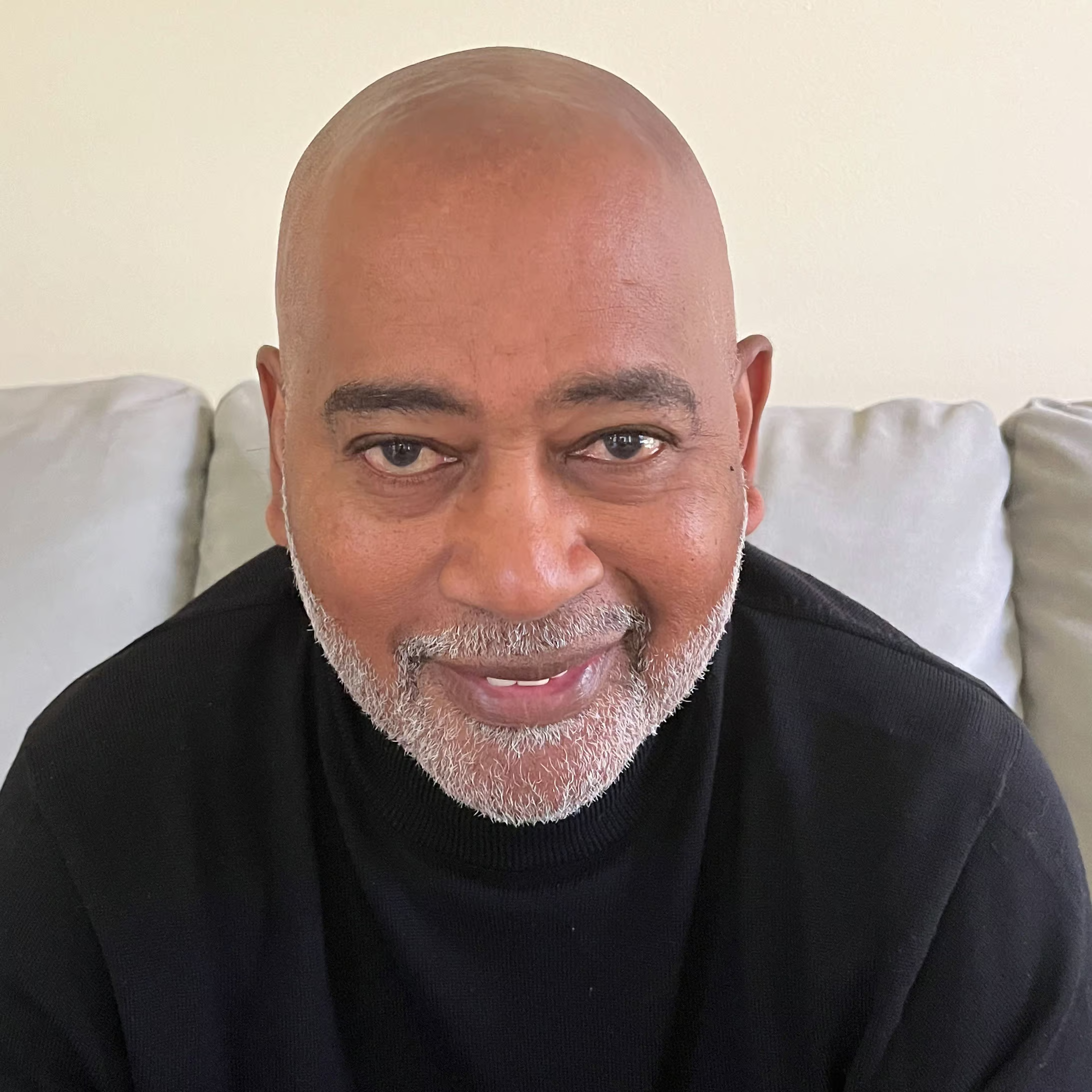

Kenneth V. Hardy, PhD, is President of the Eikenberg Academy for Social Justice and Clinical and Organizational Consultant for the Eikenberg Institute for Relationships in NYC, as well as a former Professor of Family Therapy at both Syracuse University, NY, and Drexel University, PA. He's also the author of Racial Trauma: Clinical Strategies and Techniques for Healing Invisible Wounds, and The Enduring, Invisible, and Ubiquitous Centrality of Whiteness, and editor of On Becoming a Racially Sensitive Therapist: Race and Clinical Practice.
Cultural and Racial Storytelling is a clinical strategy that empowers therapists to deepen their capacity to engage race, culture, identity, suffering, and survival as central dimensions of therapeutic work—not peripheral concerns to be addressed only when they “come up.” In this workshop, you’ll discover a powerful clinical pathway for helping clients name lived experiences, reclaim voice, make meaning, and situate personal suffering within broader histories of family, community, oppression, resilience, and survival. You’ll learn how to listen with dignity, ask courageous and clinically useful questions, and create space for clients’ cultural and racial narratives to become (re)sources of insight, validation, resistance, and healing. You’ll explore how to:
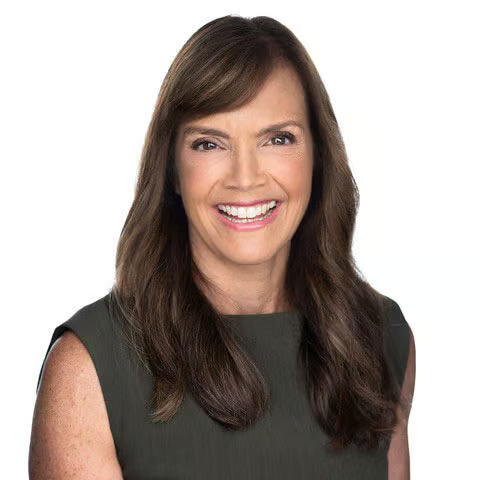
Lynn Lyons, LICSW, is a speaker, trainer, and practicing clinician specializing in the treatment of anxious families. She’s the coauthor of Anxious Kids, Anxious Parents and the co-host of the podcast Flusterclux, as well as a featured expert in the 2023 documentary Anxious Nation. Her latest book for adults is The Anxiety Audit.
In this era of “mental health awareness,” young people seem to be constantly exposed to the language of psychoeducation and the world of diagnoses and disorders. Why then are they doing so poorly? Social media and covid may be part of the story. But what if the real problem lies in the very “coping strategies” that are taught by mental health providers? According to research, many of our approaches to anxious kids and teens contribute to more fragility, less resilience, and a generation of “stuck” young adults. This workshop examines how some of the most routinely used interventions for anxiety, OCD, depression, somatic symptoms, and ADHD may be reinforcing the problem they’re intended to solve. You’ll discover how to:
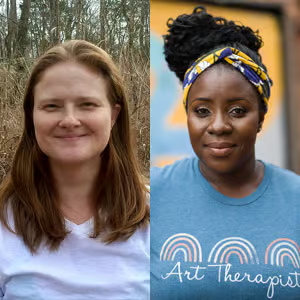
Kelly Jacobs, MA, LCPC, LCPAT, ATR-BC is a somatic-focused art therapist who integrates creative expression and embodied awareness in clinical practice. She works in private practice in Maryland supporting clients in creatively navigating traumatic stress, dissociation, mood disorders, and perinatal issues.
Alberta (Alby) Gyimah-Boadi, MA, LCPC, LCPAT, ATR-BC, is a trauma-informed art therapist providing individual, family, and group therapy to children, adolescents, and adults. She has significant experience in international, community-based, school, and medical settings. She currently works at Inova Peterson Life with Cancer and in private practice at Mosaic Therapy Services in the DC area.
In therapy, as in art, people often get blocked, stuck in repetitive patterns, and cut off from their natural source of creativity. In both the therapy room and on the artist’s canvas, getting unstuck is a matter of improvising. Improvisation is a creative leap of faith, a liberating experience that often leads to fresh discoveries and insights. In this experiential workshop, you’ll learn how to use visual art, embodied expression, and courageous experimentation to tap into your intuition and imagination. Along the way, you’ll discover how this process parallels tapping into your innate creativity as a therapist, and how you can help clients leave judgment behind to access the hidden strengths of the creative self. Absolutely no prior art-making experience is required! You’ll explore:
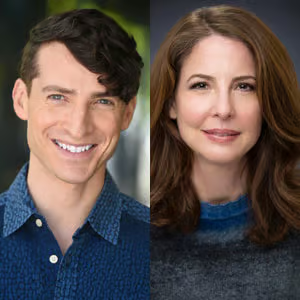
Mark O’Connell, LCSW-R, MFA, is a psychotherapist and author in New York City He teaches workshops based on his book The Performing Art of Therapy: Acting Insights and Techniques for Clinicians, and writes for Psychology Today among other popular sources, as well as clinical journals.
Robin Weigert is an Emmy-nominated actress best known for her roles in Deadwood and Big Little Lies.
Therapists have never had more theories, models, and techniques to draw upon. But what happens when those tools aren't enough to reach your client—to help them feel recognized, break stuck patterns, and discover new possibilities for living? Research consistently shows that, regardless of clinical approach, the therapist's capacity to meet and respond to their clients is paramount. Yet actors receive far more training than therapists in how to intentionally use our presence, attention, breath, body, voice, imagination, and nonverbal communication to do this. In this experiential workshop, we’ll explore what therapists can learn from actors about embodied listening, imagination, and the transformative possibilities of live scene work. Through interdisciplinary conversation, clinical and actorly examples, improvisation, and experiential exercises, you’ll learn how to “show up” for your clients in new ways, inviting them toward greater aliveness, agency, and discovery. You’ll also learn how to:
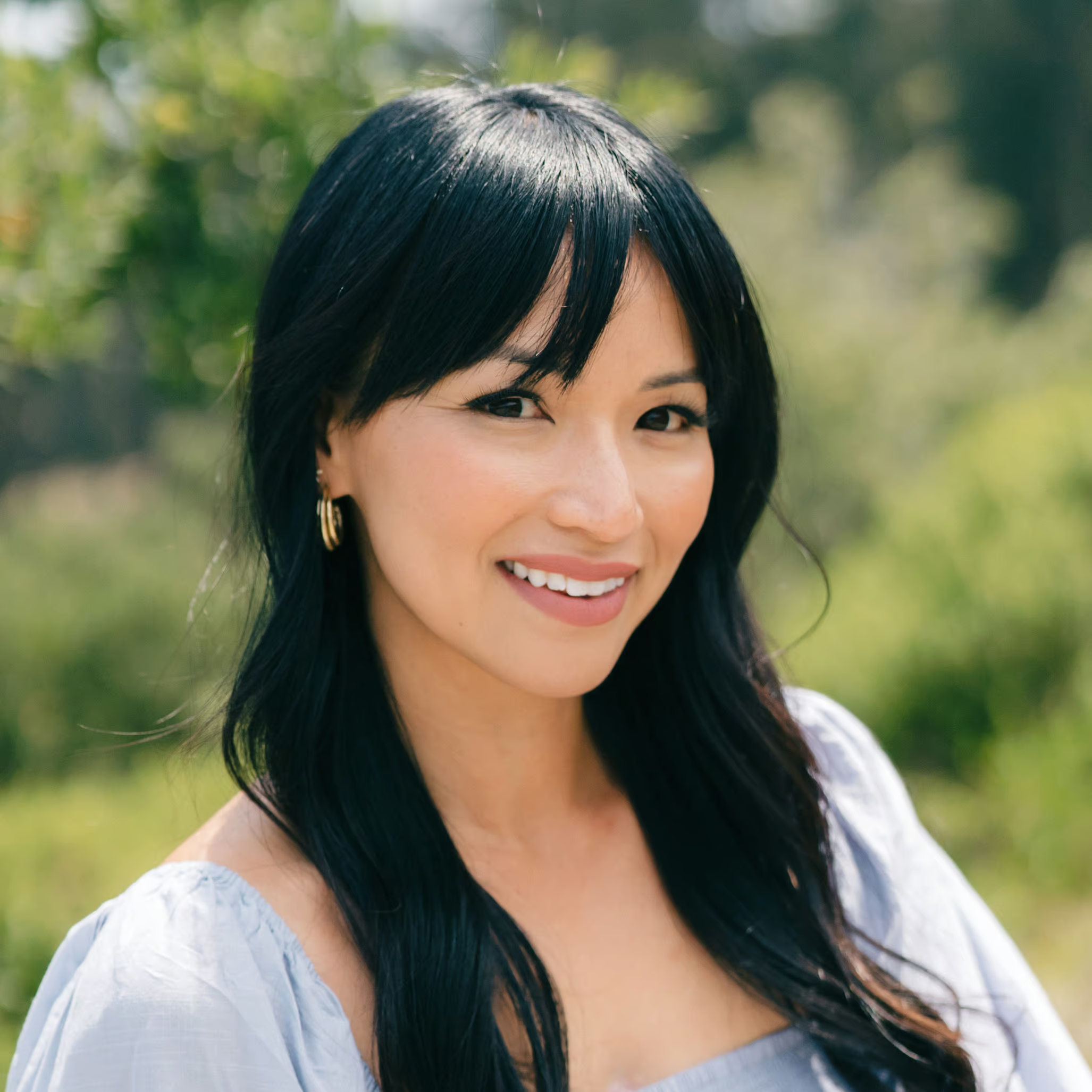
Christine Mark-Griffin, LCSW, RPT, RYT, is a leading expert in EMDR for children and author of the award-winning EMDR Workbook for Kids. She's the clinical director of Spark All Wellness and founder of EMDR for Kids, providing training and resources for clinicians, parents, and families. She's also a lead trainer with Transcending Trauma Through Yoga, where she supports clinicians in integrating trauma-informed yoga into clinical practice.
As therapists, we spend our days helping others regulate their nervous systems, yet our own nervous systems need care, too. In this immersive, experiential workshop, you’ll learn trauma-informed yoga, breathwork, mindfulness, grounding, and embodied practices that can be used both with clients as clinical interventions and with yourself to support your own regulation and well-being. Explore how these practices can be adapted to support safety, emotional regulation, body awareness, and trauma healing across clinical settings. Drawing from EMDR-informed principles, the workshop incorporates bilateral, rhythmic, and body-based interventions that can be thoughtfully integrated into trauma-focused therapy. Come as you are, choose what feels right for you, and explore what you might offer your clients. You'll discover:
Jody Wager, MS, BC-DMT, is a dance therapist with 40+ years of experience moving with and treating clients of all ages and abilities. She’s the director of the expressive therapy department at Dominion Hospital in Falls Church, VA, and the past president of the American Dance Therapy Association and the National Coalition of Creative Arts Therapies Associations.
Liz Freeman, MA, BC-DMT, serves as the Lead Dance/Movement Therapist for Creative Forces®: NEA Military Healing Arts Network. She works at the National Intrepid Center of Excellence (NICoE) directorate of Walter Reed National Military Medical Center, which is an integrative treatment program for active duty service members recovering from traumatic brain injury and associated psychological health conditions.
Embodied therapists mindfully connect to present moment experiences and gain valuable insight by focusing on the wisdom of the body—their own and their client’s. In this highly experiential workshop, you’ll explore somatic attunement through a range of expressive dance, movement, and integrative art activities. Through participation in various movement experiences, you’ll develop your innate ability to attend empathically to clients, respond authentically, and translate nonverbal experiences into cognitive insights. Whatever your clinical approach, you’ll learn body-mind exercises that can be integrated into any practice, and discover:
Few sources of healing are more powerful and more underestimated than simple human connection. It’s no wonder a lack of social support is a major risk factor for everything from major depression to heart disease. But while you may be hearing plenty about “the loneliness epidemic,” you may not be hearing enough about the reasons we can be hopeful about turning it around.
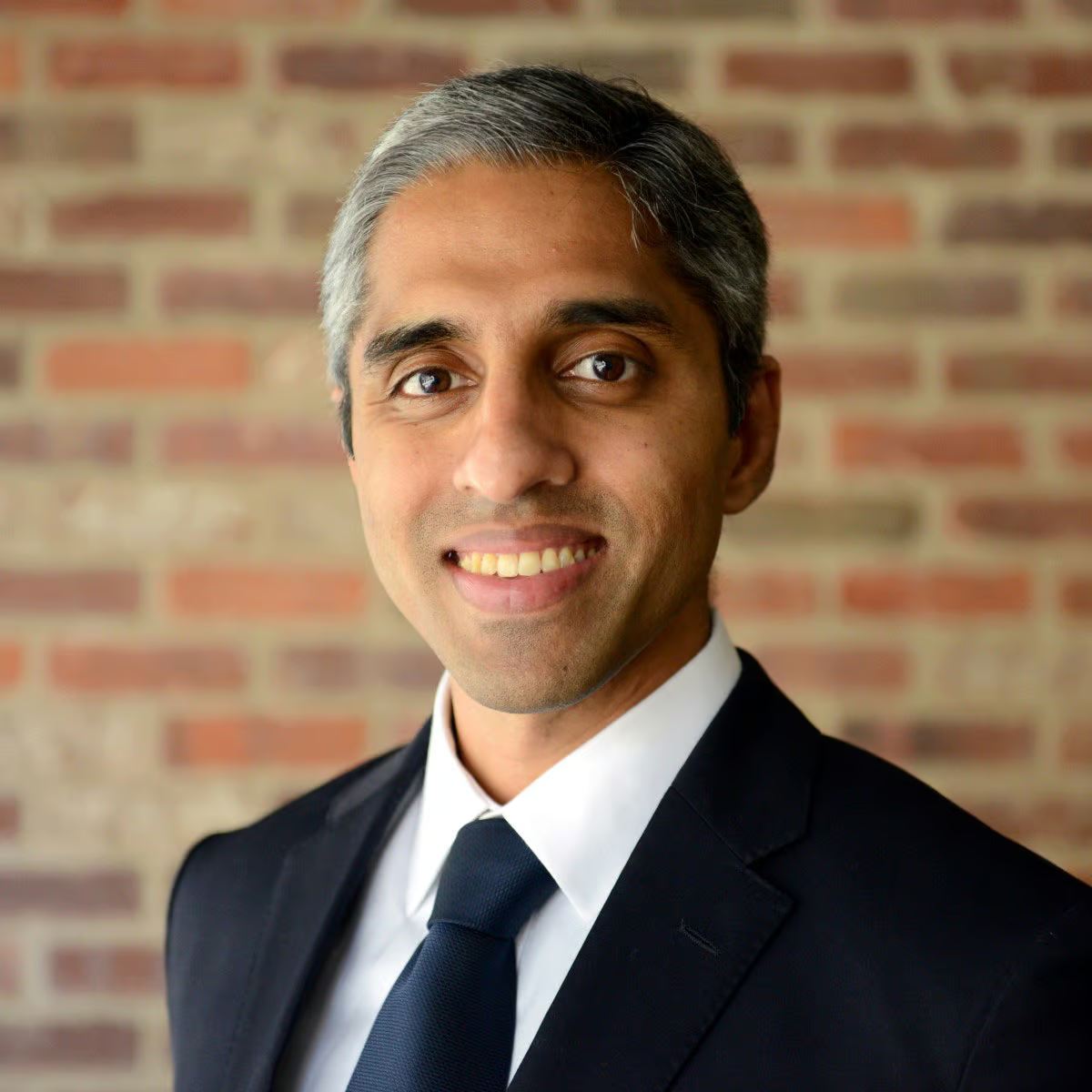
Vivek Murthy, 19th and 21st Surgeon General of the United States and bestselling author, is one of the leading voices sounding the alarm about our crisis of loneliness—and a passionate champion of the immeasurable value of human connection and our capacity to nurture it. A decorated public health leader and host of the popular podcast Staying Human, Murthy has earned praise from luminaries including Brené Brown, Malcolm Gladwell, and Susan Cain, who called his New York Times bestseller—Together: The Healing Power of Human Connection in a Sometimes Lonely World—“a gift for us all.”
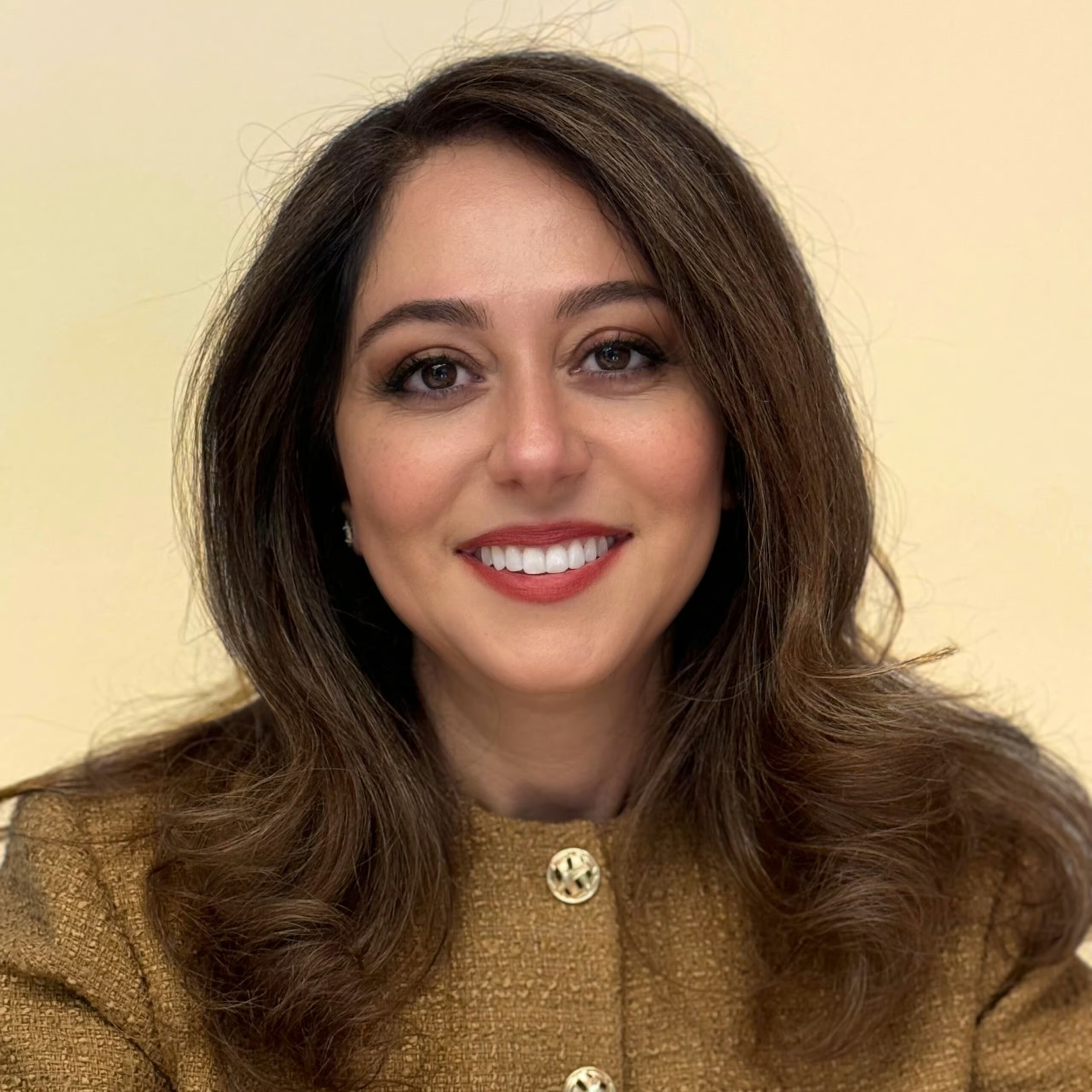
In this inspirational keynote conversation with award-winning social psychologist Sara Nasserzadeh, Murthy brings his characteristic intelligence, wit, and candor to the exploration of how we can stay human in the age of AI and what therapists can do to move clients from isolation toward belonging.
Most therapists with clients in long-term partnerships have heard some version of a perennial complaint: “It feels like the spark is gone.” But instead of using the usual clinical strategies to try to reignite that spark, which may or may not work, renowned sex educator and researcher Emily Nagoski believes we should be rethinking what we’ve been taught about desire in the first place.
A leading voice on the science of connection, Nagoski’s research is changing the way therapists and couples understand desire, pleasure, and intimacy. Her TED Talk on sustaining sexual connection has been viewed nearly four million times, and her New York Times bestselling books Come Together and Come as You Are have earned widespread acclaim. John Gottman called the latter “the best book I’ve ever read about sexual desire.”
Join us for a candid, in-depth conversation between Nagoski and sexuality educator Robyn Manning-Samuels, the coauthor of the Come Together workbook and the health and sexuality expert for Gooseberry magazine. Moderating their talk is acclaimed couples therapist and sexologist Tammy Nelson, host of The Trouble With Sex podcast. Together, they’ll unpack what the science really says about desire, what thriving long-term couples understand about pleasure and connection, and what practical tools you can immediately bring into your work with couples.

After a full day plumbing the depths of the human psyche, it’s time for something equally therapeutic: comedy! Join us for an evening of communal catharsis and laughs with comedians Chris Gethard and Janet McNamara.
Gethard is a comedian, actor, author, and podcaster whose critically acclaimed HBO one-man special, produced by Judd Apatow, has earned widespread praise for bringing humor and candor to conversations about mental health. A longtime fixture on the New York comedy scene, you’ve seen him in hit shows like The Office, Broad City, and Parks and Recreation. In 2025, Time named his award-winning podcast Beautiful/Anonymous one of the 100 best podcasts of all time. He’s also the cofounder of Laughing Together, which brings comedy workshops into schools as a social-emotional learning tool.
Joining him is fellow New York stand-up comedian Janet McNamara, whose razor-sharp talent for finding absurdity in everyday life have made her one of comedy’s rising stars. Her debut special Not Smart Enough helped make her a regular at New York’s legendary Comedy Cellar, and her stand-up has been championed by Bill Burr and Amy Schumer. She’s appeared on America’s Got Talent and American Idol (yes, really!), and opened for acclaimed comedians like Jessica Kirson and Maria Bamford, who called her “a fantastic comic” with “enviable timing.”
Together these two comics promise an evening of fun and relaxation. And don’t worry—nobody will ask you to identify where you feel the laughter in your body.
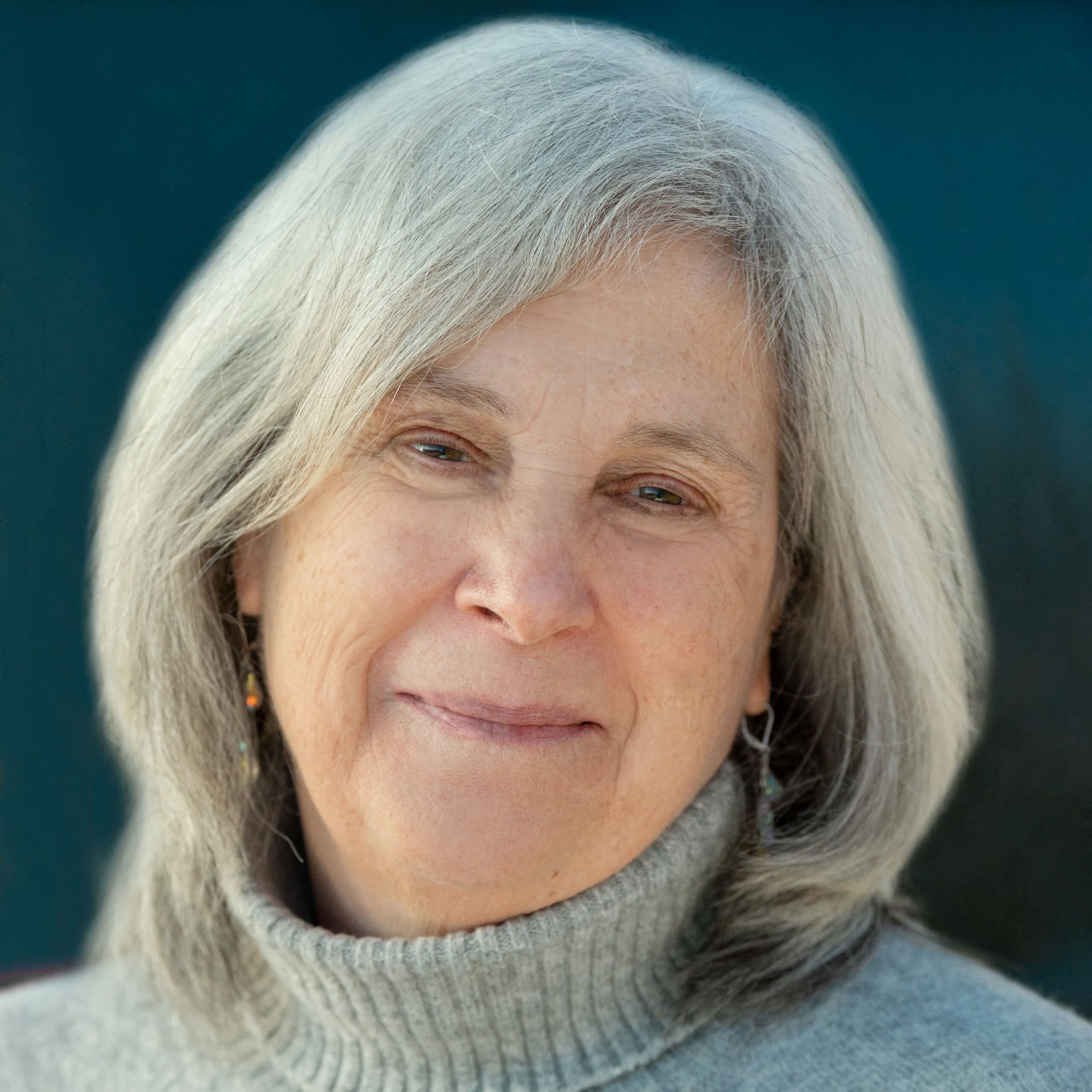
Deb Dana, LCSW is a clinician and consultant specializing in using the lens of Polyvagal Theory to understand and resolve the impact of trauma and create ways of working that honor the role of the autonomic nervous system. She developed the Rhythm of Regulation Clinical Training Series and lectures internationally on ways Polyvagal Theory informs clinical work. She’s a founding member of the Polyvagal Institute as well as the author of many books on Polyvagal Theory.
We can’t think our way to safety. We must feel our way there through the nervous system. While the ventral branch of the nervous system can help clients feel safe enough to be curious, connected, and creative, for those who’ve lived in survival mode, this state can feel unfamiliar or unattainable. In this workshop, we’ll explore how to cultivate ventral regulation in a way that creates the neurobiological conditions where thriving, rather than surviving, becomes possible. You’ll enhance your understanding of the science of embodied safety and learn practical tools to help clients expand their capacity for this state of aliveness. You’ll discover how to help clients:
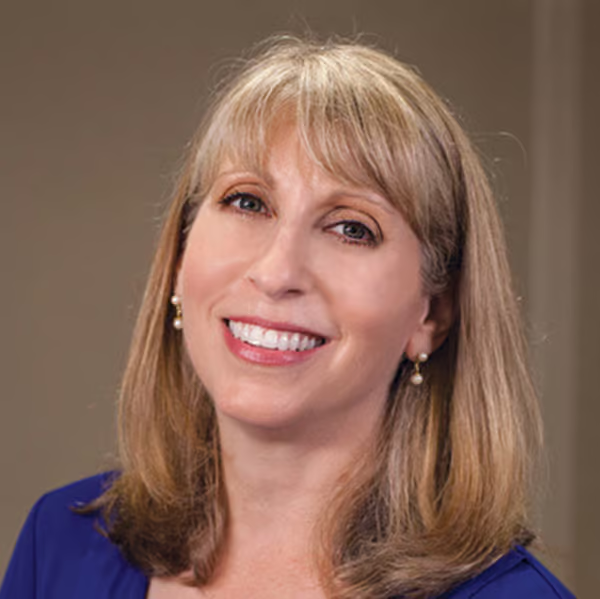
Lisa Ferentz, LCSW-C, DAPA, is a recognized expert in the strengths-based, de-pathologized treatment of trauma and has been in private practice for more than 42 years. She’s a clinical consultant to practitioners and mental health agencies in the United States, Canada, the UK, Ireland, Australia, Italy, Spain, Israel and South Korea.. And she's the author of Treating Self-Destructive Behaviors in Trauma Survivors: A Clinician’s Guide, 2nd Edition, Letting Go of Self-Destructive Behaviors: A Workbook of Hope and Healing, and Finding Your Ruby Slippers: Transformative Life Lessons From the Therapist’s Couch.
Every child comes into the world with primal needs to feel seen, heard, understood, protected, loved, and safe. And when those needs are denied, it creates insecure attachment that often manifests in the fawn response, one of the lesser understood trauma responses. In this workshop, we’ll identify the many forms of the fawn response, including hypervigilance, parentification, acquiescence, “mind-reading,” and the abdication of needs and feelings. We’ll identify the dysfunctional family dynamics and unhealthy parenting styles that promote the need to fawn, as well as the trajectory of childhood fawning into adolescent and adult co-dependency. We’ll also process the behavioral and emotional manifestations that show up in personal relationships—including the client-therapist relationship. At each stage, you’ll walk away with different ways to teach “unfawning,” empowering clients to engage in more self-advocacy, assertiveness, and self-actualization. You’ll discover:
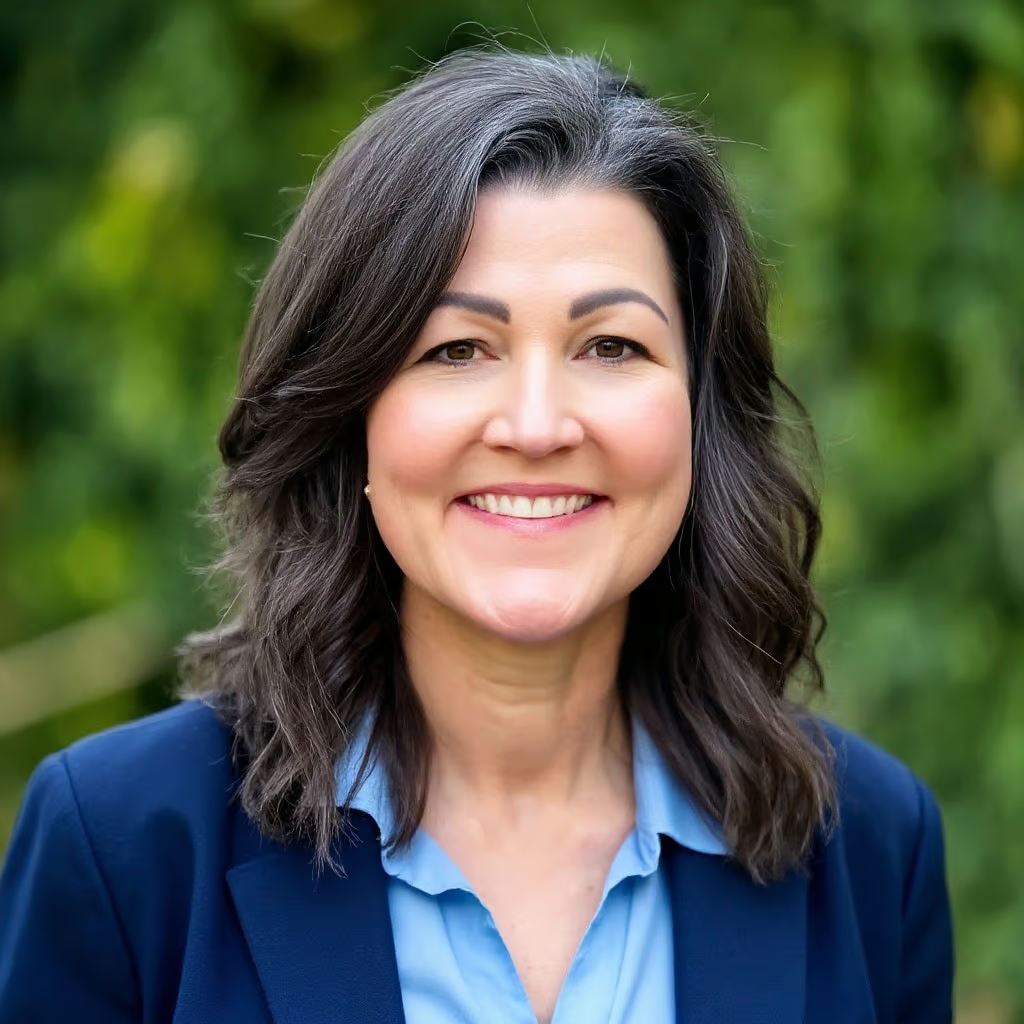
Michelle Maikoetter, MA, NCC, LPC-S, is a trauma-informed childcare specialist who has experience in domestic violence/sexual assault, afterschool programming, wilderness programming, juvenile justice, and residential, educational, and community-based settings. A practitioner, trainer, and mentor in Dr. Bruce Perry’s Neurosequential Model of Therapeutics, she helps distill its clinical concepts into applicable, actionable, and understandable terms.
Trauma, instability, and distress during developmental years can have a lasting impact on your client’s ability to manage emotions, build relationships, and function in daily life. Yet too often, instead of receiving the tailored therapy they need, these clients receive multiple diagnoses and treatment strategies that provide minimal progress.
The Neurosequential Model of Therapeutics (NMT) offers another way forward, looking at a client's developmental history, experiences, and current functioning to better understand how trauma has affected their development and which therapeutic interventions may be most helpful, and when.
In this workshop, you’ll explore the key concepts behind NMT and learn practical ways to make more intentional treatment decisions for complex trauma cases.
You will also learn how to:
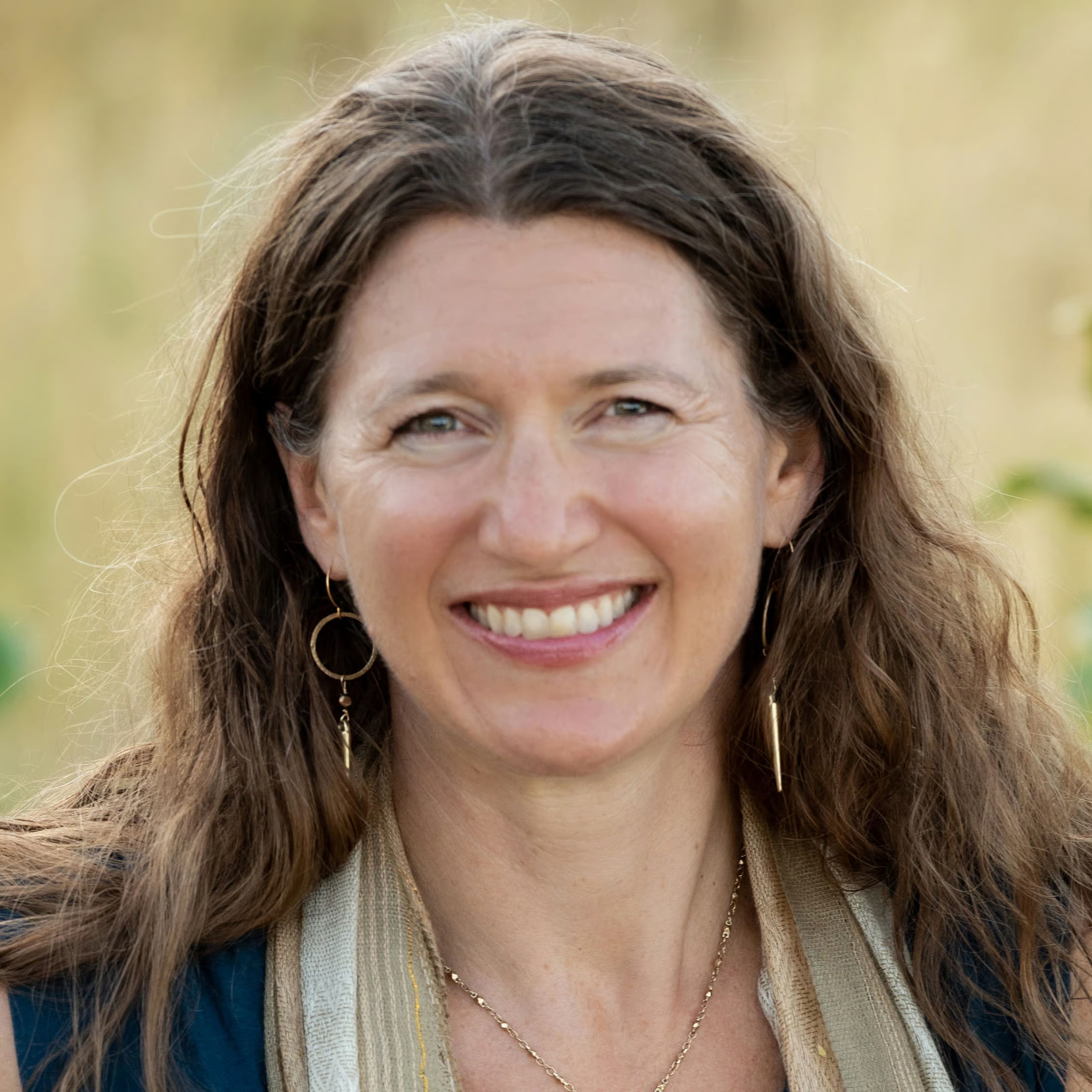
Arielle Schwartz, PhD, CCTP-II, E-RYT is a clinical psychologist, teacher, and certified Kripalu yoga instructor who specializes in treating PTSD and complex trauma. She’s the author of eight books, including The Complex PTSD Workbook, EMDR Therapy and Somatic Psychology, The Post Traumatic Growth Guidebook, The Complex PTSD Treatment Manual, and Therapeutic Yoga for Trauma Recovery. She trains therapists in the application of EMDR, somatic psychology, parts work therapy, and mindfulness-based interventions in the treatment of trauma and complex PTSD. She’s the founder of the Center for Resilience Informed Therapy and teaches with the Polyvagal Institute.
Most trauma training focuses on explicit memories, the ones accompanied by images or a familiar verbal narrative. But what about wounds that happened before language could be accessed? Developmental trauma that occurs during birth and early attachment wounds live in the body as implicit memory—psychobiological patterns of sensations and nervous system states your clients may not be able to articulate but nevertheless still feel. This workshop will guide you to recognize and work with pre- and perinatal traumatic events, attending to somatic experience, the relational field between therapist and client, and the internal system dynamics that keep many clients stuck. You’ll learn how to:
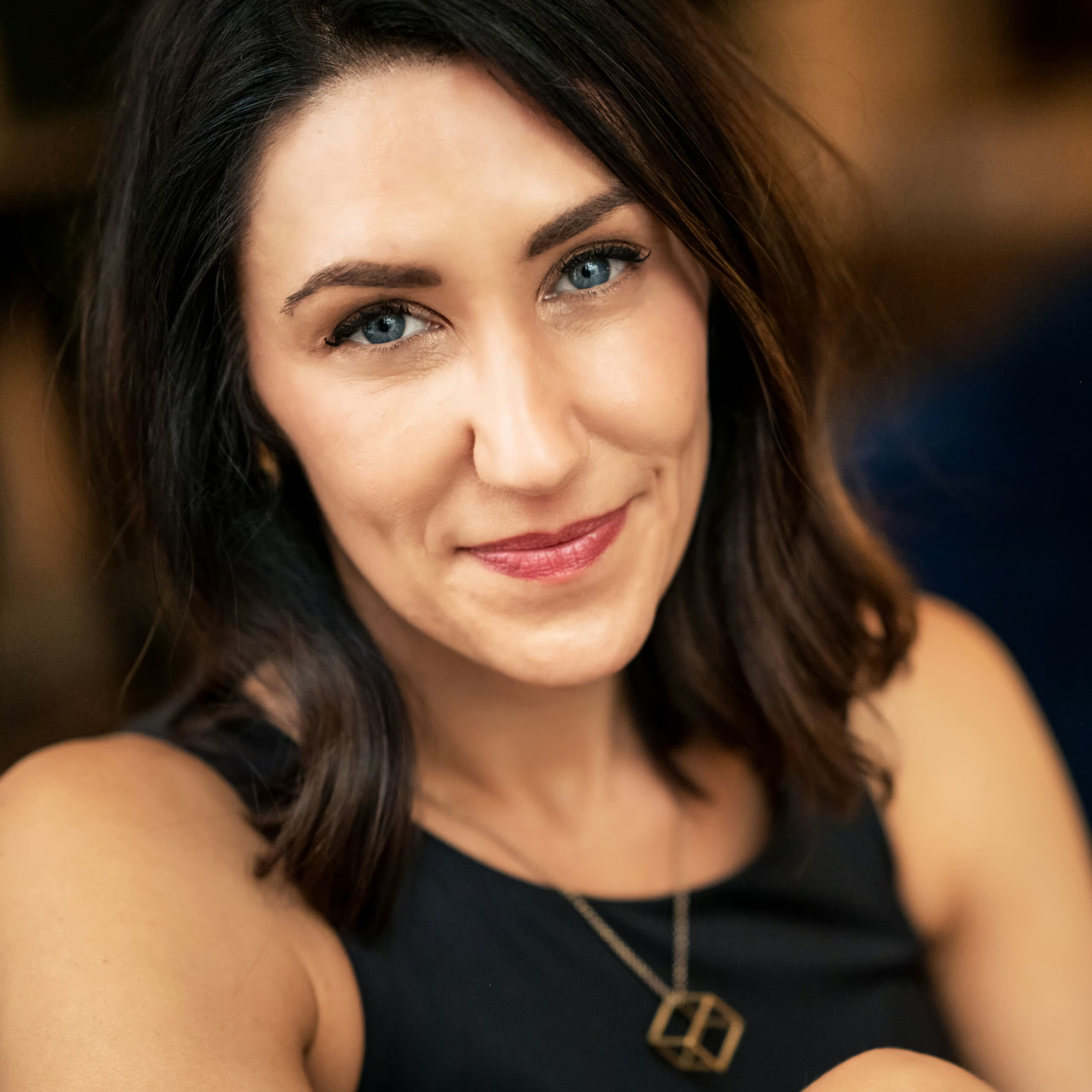
Kory Andreas, LCSW-C, is an autism specialist and late-diagnosed AuDHD clinician in private practice. She specializes in high-masking and late-diagnosed autistic adults and provides clinical training for therapists and organizations nationwide. She is the recipient of the Rich Simon Writing Award, creator of the Unmasked & Unplugged retreat, and host of That's Me: Autistic Lives. Unfiltered, a podcast for and about late-diagnosed autistic adults.
Autistic adults, many of them high-masking, late-identified or unidentified, and carrying years of misdiagnosis—are showing up in therapy offices everywhere. And the clinical tools most practitioners are using were never built for them. This workshop cuts through the outdated frameworks and gives you a modern, identity-forward lens for recognizing and working with Autistic clients. Discover updated clinical language, an introduction to PDA (pathological demand avoidance) as a distinct and commonly missed adult profile, interventions to work with interoceptive differences and chronic dysregulation. You'll explore how to:
Janina Fisher, PhD is a licensed clinical psychologist, a former instructor at Harvard Medical School, an Executive Board member of the Trauma Research Foundation, and a Patron of the John Bowlby Centre. She’s the author of Healing the Fragmented Selves of Trauma Survivors: Overcoming Self-Alienation, Transforming the Living Legacy of Trauma: A Workbook for Survivors and Therapists, and The Living Legacy Instructional Flip Chart. Her treatment model, Trauma-Informed Stabilization Treatment (TIST), is now being taught around the world.
Gliceria Perez, LCSW, is a social worker in private practice and a former instructor at NYU School of Social Work. She's trained in EMDR, certified in TIST, and is training in Brainspotting. She speaks and presents on the topics of racial trauma and implicit bias.
Debra Chatman-Finley, LPC, is a clinician in private practice and a former instructor at NYU School of Social Work. She's trained in EMDR, certified in TIST, and is training in Brainspotting. She speaks and presents on the topics of racial trauma and implicit bias.
Rather than feeling comfortable talking about race, privilege, microaggressions, and discrimination in therapy, most white therapists have been trained to be colorblind. But implicit bias exists in all social interactions, and in a world in which bias can lead to physical and emotional injuries, people of color experience the potential for danger on a daily basis, and it’s impossible for them to feel safe—even when sitting down with well-meaning therapists. In this workshop, you’ll learn a trauma-informed approach for communicating safety to your clients by learning about implicit bias and how it informs our behavior and body language. You’ll learn to develop a greater awareness and understanding of your biases in order to better attune to clients, as well as specific, trauma-informed strategies to initiate and navigate conversations about race and bias so that your clients feel a greater sense of safety in the consulting room. You’ll also learn:
Alexandra H. Solomon, PhD, is a licensed clinical psychologist, adjunct professor at Northwestern University, host of the podcast Reimagining Love, and the author of three books, including Love Every Day.
Whether it’s a fight about money, sex, parenting, or how much time to spend together, most couples are having the same argument: one partner is pushing for something to shift, and the other is asking to be met where they are. The more one partner pushes for growth, the more the other insists things vare fine—until both partners feel unseen and stuck. Even though most therapists know that change and acceptance live in dynamic tension, it can be extremely difficult to soften a polarity that has had years—sometimes even decades—to harden. In this workshop, we'll explore why this pattern is so common and sticky, and how you can help couples soften it. By the end, you'll leave with concrete language, questions, and exercises you can use with the polarized couples in your own office. You'll also learn:

Matthias Barker, LMHC, is a psychotherapist widely recognized for his unique approach to making mental health knowledge and skills accessible to the wider public. Through platforms like Instagram, TikTok, Facebook, and his top-ranking Spotify podcast, he delivers psychoeducational content to a following of over 4 million people. He’s the founder of estrangement.com, the largest online platform that serves both parents and adult-children facing parent-child estrangement.
Parent-child estrangement is a deeply painful and complex issue, with latest reports indicating that as many as 1 in 4 families are affected. Understanding and addressing these relational wounds can significantly enhance not just our clients’ mental health but the health of entire family systems and communities. This workshop equips clinicians to intervene at three leverage points: mapping the negative interaction cycle that drives disconnection, healing the underlying shame and fear that fuel it, and guiding families toward conversations grounded in curiosity, accountability, and calm power instead of worry. You'll leave able to spot the subtle moves that widen the gap, teach clients how to own their part without self‑condemnation, and scaffold concrete next steps that honor safety while reopening doors to relationships. You’ll also discover:
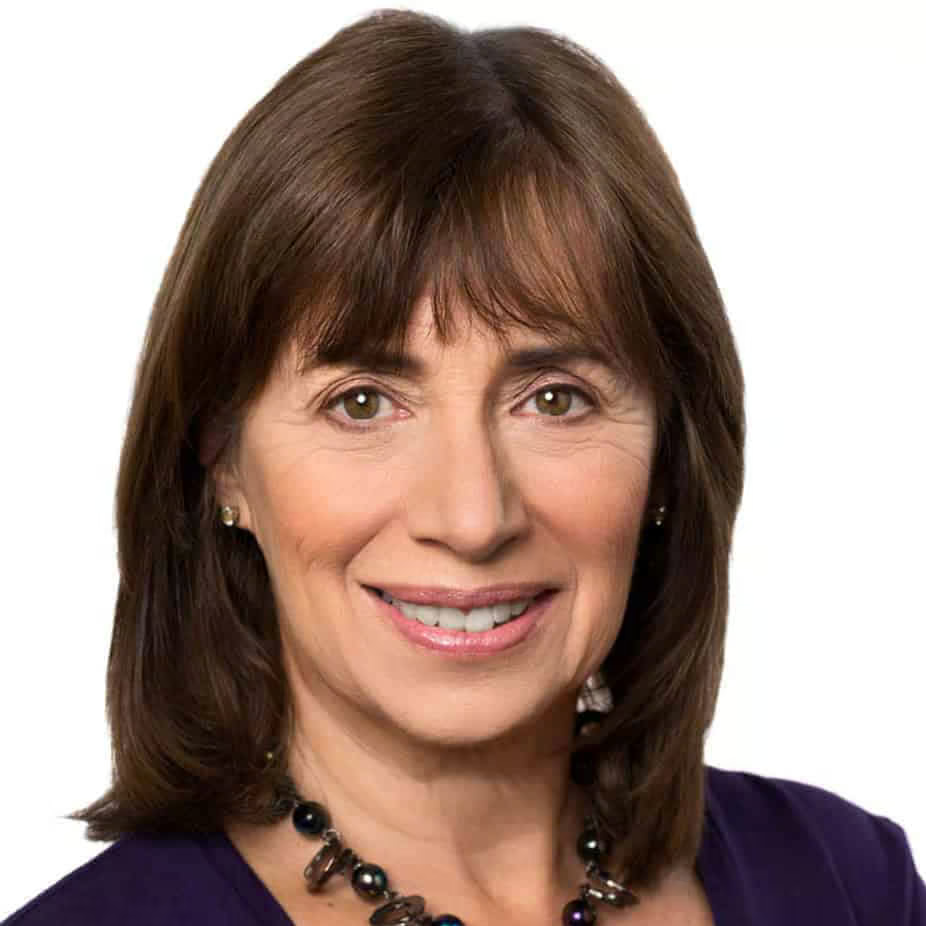
Ellyn Bader, PhD, is a psychologist, co-director of The Couples Institute in Menlo Park, California, and co-creator of The Developmental Model of Couples Therapy. She’s one of the early founders of couples therapy, as well as a recognized thought leader and trailblazer in relationship therapy. She coauthored the award-winning textbook In Quest of the Mythical Mate and Tell Me No Lies: How to Face the Truth and Build a Loving Marriage with her husband, Dr. Peter Pearson. She’s been featured on Nightline, Good Morning America, and NPR, as well as in O Magazine, Cosmopolitan, and other publications.
Like it or not, confrontation is a necessary part of all therapy. Maybe your client comes into therapy with grand pronouncements: “I’m all in—I'll do the work!” And for a little bit, it seems like they’ll follow through. But then you bring up, even gently, the ways in which they’re undermining their goals, they deny, diffuse, or become defensive, and the work stalls. In this workshop, you’ll discover the six skills that are proven to help clients take accountability without triggering defensiveness. Using video from actual client sessions—including moments of confrontation—we’ll break down the “confrontation cycle,” walking through techniques that move clients forward, instead of causing them to regress or feel attacked. You’ll learn how to:
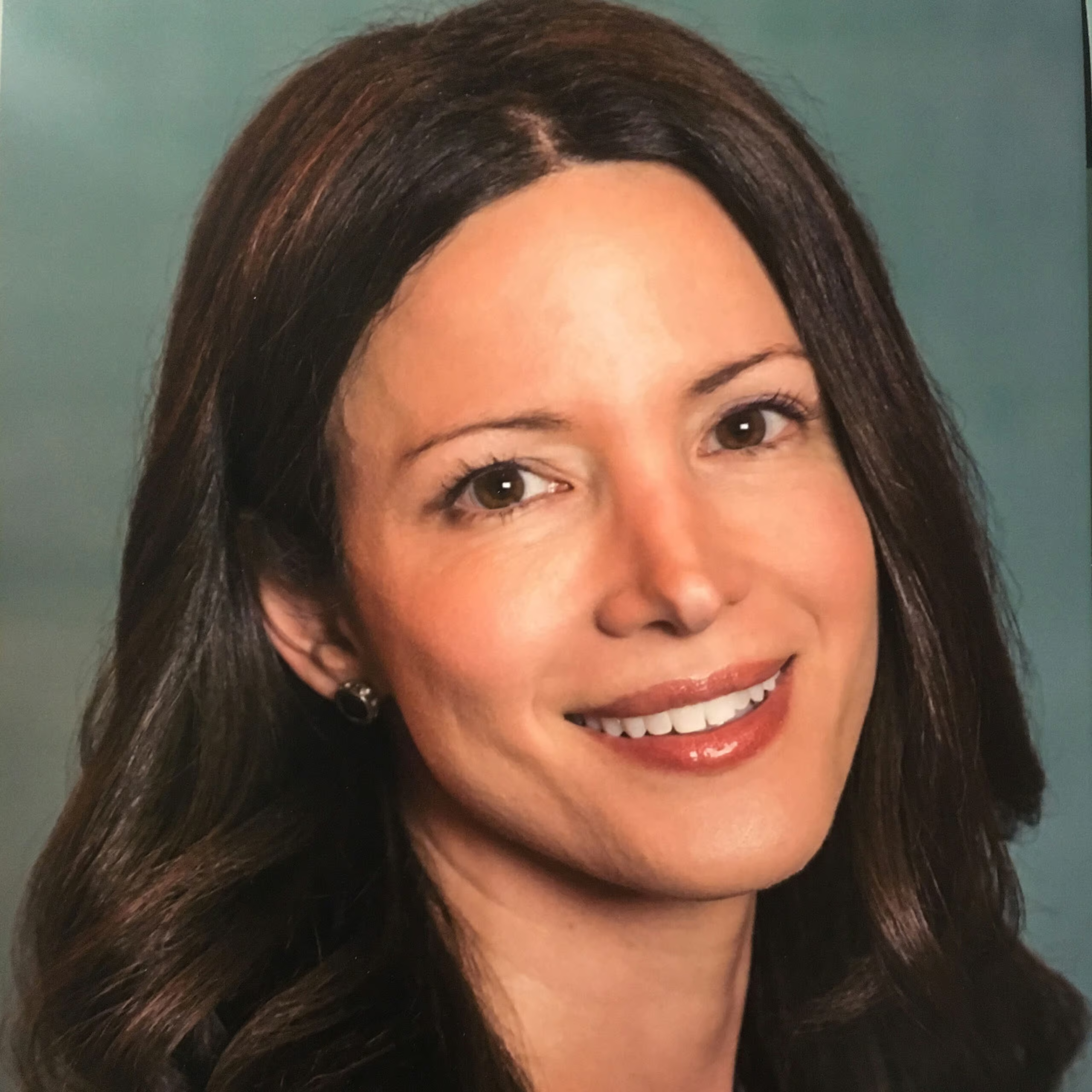
Alexia Rothman, PhD, is a licensed clinical psychologist, international speaker, and Lead Trainer for the Internal Family Systems model. She’s a former adjunct professor at Emory University and Agnes Scott College, and co-hosts the IFS-based podcast, IFS Talks.
IFS therapists are continuously tracking movement in their clients’ internal systems. Parts blend and unblend, Self-access expands and contracts, and thoughts, beliefs, emotions, and impulses surface as parts step forward. In this workshop, you’ll learn a complementary approach for tracking this movement by integrating IFS therapy with polyvagal-informed practice. Together, we’ll explore the interconnection between the client’s autonomic nervous system and the activity of their parts. Along the way, you’ll learn how attending to parts and autonomic states together can inform the nature, pacing, and direction of your healing work. You’ll also discover how to:
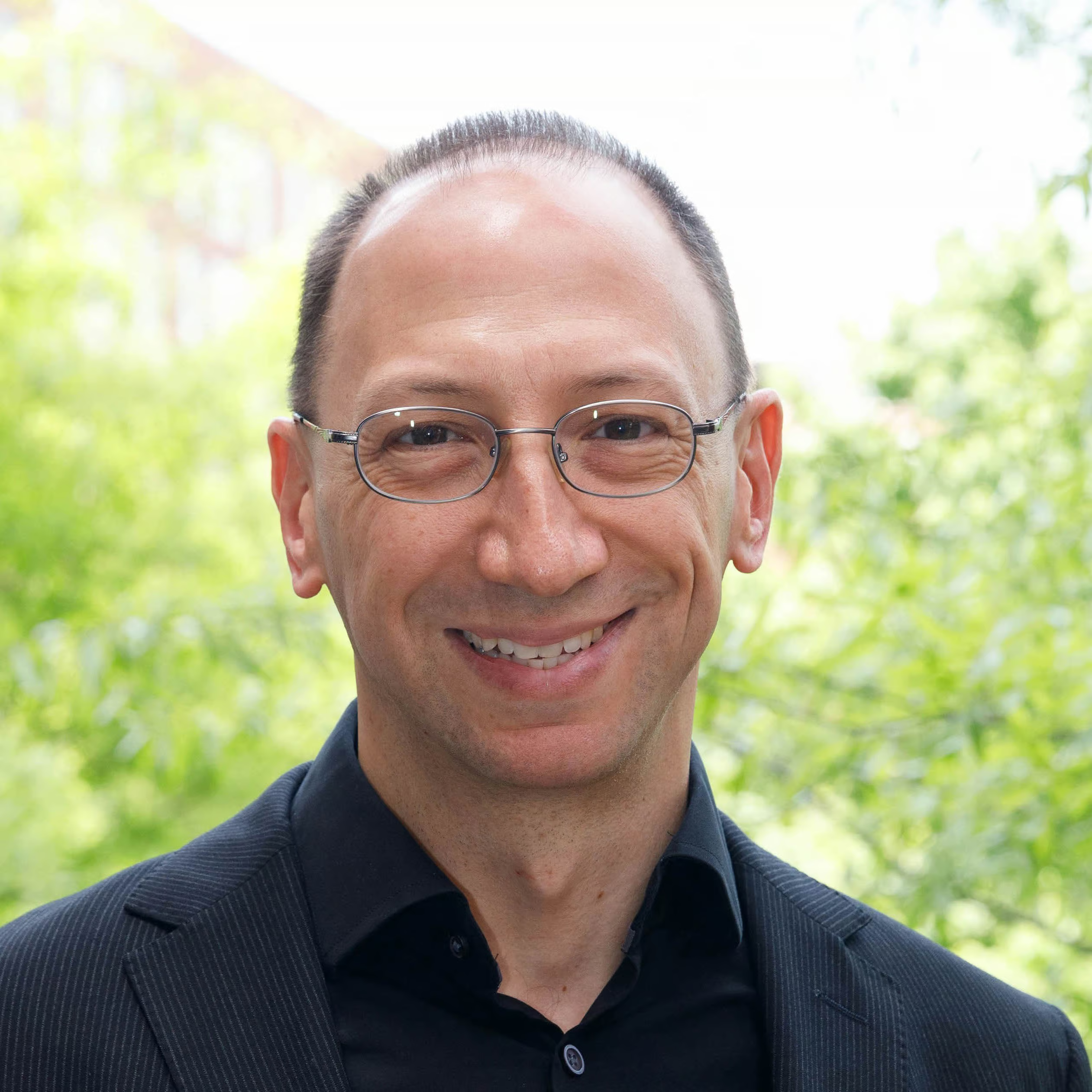
Jordan S. Potash, PhD, ATR-BC, REAT, LPAT (DC), LPCAT (MD), is a registered, board-certified, and licensed art therapist and registered expressive arts therapist. He’s Professor in the Art Therapy Graduate Program at The George Washington University, former editor of Art Therapy, and lectures globally. He’s primarily interested in the applications of art and art therapy in the service of community development, cross-cultural relationships, social change, and peace building.
Psychological flexibility is one of the most valuable resources we can foster in our clients. Rooted in Acceptance and Commitment Therapy (ACT), it describes an individual’s ability to endure hardship and suffering by adapting existing and new coping skills to meet current demands. It’s not only a useful construct across diagnostic categories, but has cross-cultural application for enhancing mental health and wellness as well. In this workshop, you’ll learn how to cultivate this trait using creative and artistic practices that encourage clients to experiment with new forms of expression and reach toward their goals. You’ll leave with concrete, evidence-based strategies that will help your clients develop and strengthen their propensity for psychological flexibility to adapt to challenges now and in the future. You’ll also discover:
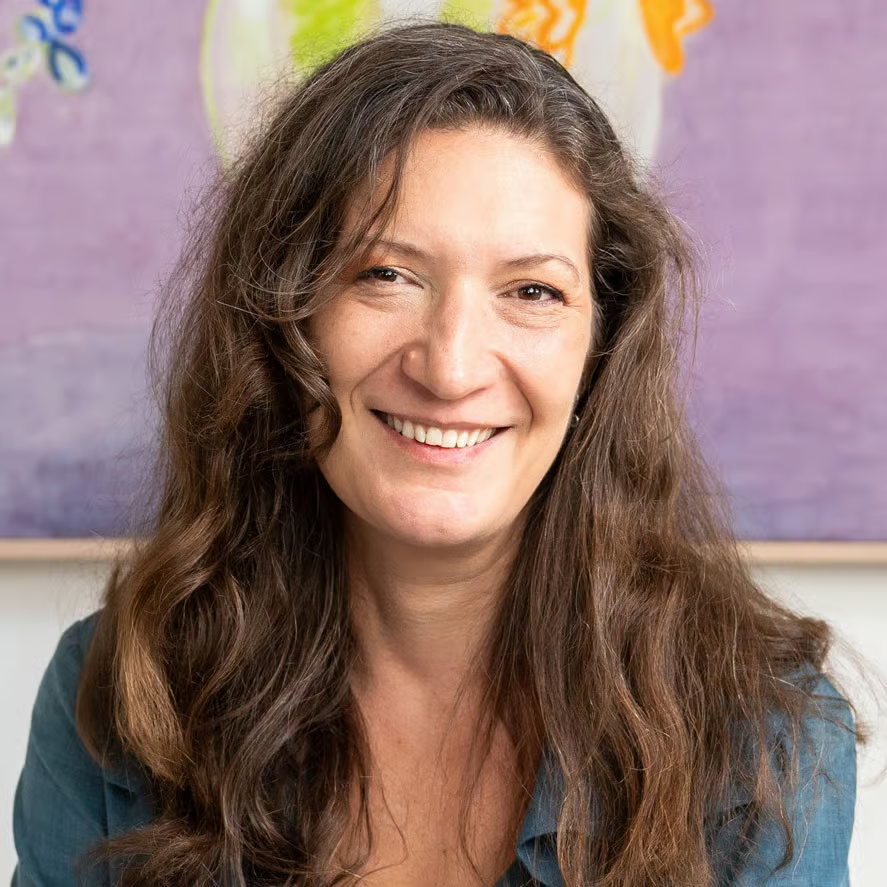
Elizabeth Nielson, PhD, is a psychologist and co-founder and CEO of Fluence, which trains clinicians to work in psychedelic-assisted therapy. She’s served as a study therapist and site coinvestigator on FDA clinical trials of MDMA- and psilocybin-assisted therapy and codeveloped the Psychedelic Harm Reduction and Integration (PHRI) model. Her work focuses on helping therapists navigate this rapidly evolving field.
Your clients are likely already asking about ketamine, psilocybin, microdosing, and other psychedelic options they’ve heard about—whether you’re ready to answer their questions or not. Psychedelic-assisted therapy has moved from fringe to front-page news, and therapists are on the front lines of the conversation about how psychedelics can accelerate healing. New trainings, certificates, and credentials are multiplying fast, while the legal ground keeps shifting under all our feet. In this workshop, you’ll be introduced to a framework for evaluating what’s credible, risky, and applicable to your own practice as you move toward psilocybin- and other psychedelic-assisted work as a licensed clinician answerable to a board, a malpractice carrier, and your clients. You’ll learn:
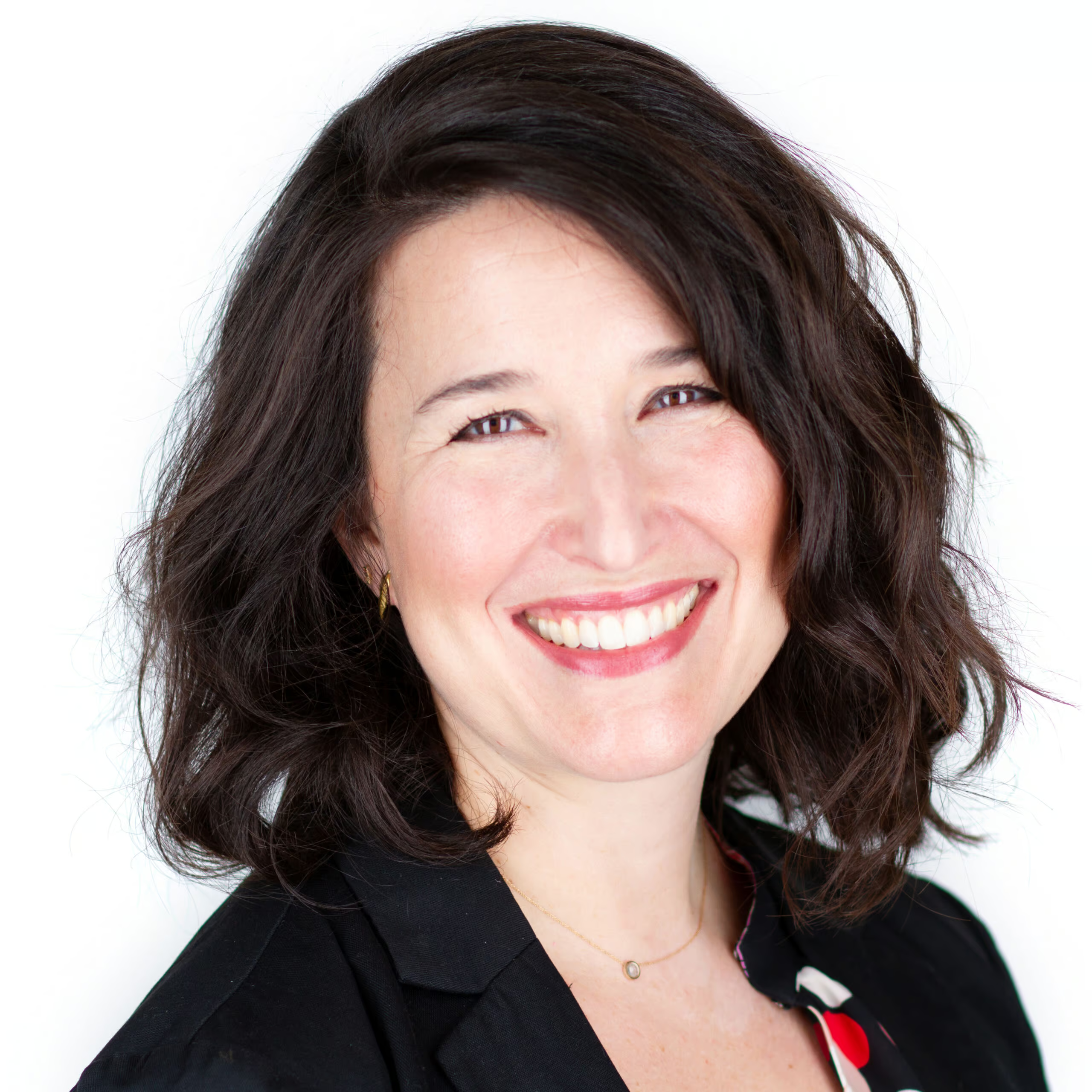
Sarah Segal McCaslin, MS, MDiv, LCSW, is a psychotherapist, ordained minister, and Executive Director of the Psychotherapy & Spirituality Institute in New York City. She teaches, speaks, and consults nationally on spiritually informed psychotherapy.
When beliefs, communities, and spiritual practices become sources of shame, fear, coercion, or rupture, the effects can reach far beyond religion. Clients may struggle with depression, anxiety, trauma, suicidality, fractured relationships, or a loss of identity, belonging, and meaning. Yet spiritual struggle is not itself a diagnosis, and religious/spiritual trauma rarely fits neatly into a single clinical category. In this workshop, we’ll take a systemic approach to understanding these experiences across overlapping psychological, relational, and spiritual dimensions. We’ll explore how to assess what's been harmed without pathologizing spiritual struggle, and how to help clients navigate what they may want to question, grieve, reclaim, or reshape. You’ll discover how to:
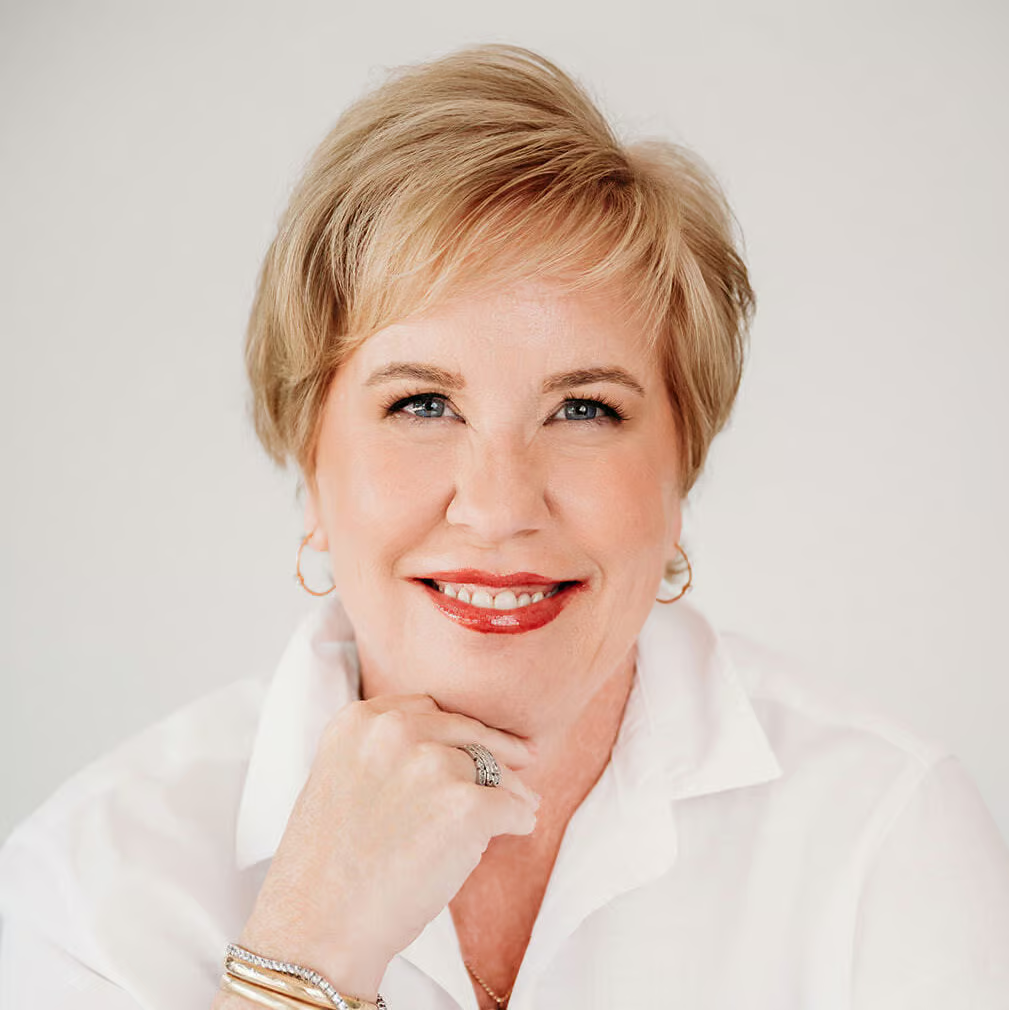
Amy Fortney Parks, PhD, LPC, ACS, is a pediatric psychologist, clinical supervisor, founder of the Clinical Supervision Directory, host of Supervision Simplified, and international trainer on supervision, ethics, and leadership.
A therapist comes to you overwhelmed by a difficult case. You jump in with answers, interventions, and advice, and the case gets handled. But did the clinician in front of you actually learn and grow? Psychotherapy has invested enormous energy in developing better treatments while paying less attention to developing the people who deliver them. Supervision is the profession’s most powerful form of leadership because it travels downstream to clients, families, organizations, and the field itself. In this workshop, you’ll explore the Supervisor Effect, a practical framework rooted in developmental neuroscience, leadership principles, and clinical supervision strategies for moving beyond mere case management to developing therapists who can think, reflect, self-regulate, and make sound decisions even when a supervisor isn't in the room with them. At a time when therapists face rising burnout and ethical uncertainty, you'll discover how to:
Laurie Mintz, PhD, is an emeritus professor, author, therapist, and speaker. At the University of Florida, she taught the Psychology of Human Sexuality to thousands of undergraduate students. She’s also the author of a self-help book for women with diminished desire, A Tired Woman's Guide to Passionate Sex: Reclaim Your Desire and Reignite Your Relationship.
“I never feel horny anymore. I could care less if I ever have sex again!” This might sound like an unusual or uncommon problem, but the reality is that nearly 40 percent of women are experiencing diminished sexual desire. However, they’re unlikely to ever share this information with their therapist unless asked about it directly. In this workshop, you’ll learn why so many women have lost interest in sex—and why asking about sex should be an integral part of your practice. You’ll not only learn to develop greater comfort discussing sexual issues, but evidence-based sex therapy strategies for diminished desire, like mindful sex and scheduling sexual encounters. You’ll walk away able to implement a plethora of concrete therapy strategies and techniques that will help your female clients reclaim desire and enjoy sex again. You’ll also discover:
Daniel Siegel, MD, is a specialist in pediatrics and child, adolescent, and adult psychiatry, as well as a clinical professor of psychiatry at the UCLA School of Medicine, founding co-director of UCLA’s Mindful Awareness Research Center, founding co-investigator at the UCLA Center for Culture, Brain and Development, and executive director of the Mindsight Institute, an educational center devoted to promoting insight, compassion, and empathy in individuals, families, institutions, and communities.
Diane Ackerman is a poet, essayist, naturalist, the author of over two dozen highly acclaimed works of nonfiction and poetry, including the New York Times bestsellers The Zookeeper's Wife, A Natural History of the Senses, and The Human Age.
Before we learn words, we learn sensations: the warmth of a body, the pitch of a voice, and the smell of a room in a particular season. These sensory signatures—sound, smell, taste, touch, and vision—quietly bind experience into memory. They shape our identity and emotions, our self-narratives, our preoccupations with the past, and our worries about the future. In this workshop, you’ll learn how to listen underneath clients’ narratives for the sensory fragments that precede language. Blending storytelling, cutting-edge science, and mindful awareness practices, you’ll learn how to help clients tap into their external and internal sensory worlds, promoting the growth of neural networks and opening new pathways for regulation, empathy, and narrative change. You’ll also learn:
Frank Anderson, MD, is a world-renowned trauma treatment expert, Harvard-trained psychiatrist, and psychotherapist. He’s the acclaimed author of To Be Loved and Transcending Trauma, and coauthor of Internal Family Systems Skills Training Manual. As a global speaker on the treatment of trauma and dissociation, he’s passionate about teaching brain-based psychotherapy and integrating current neuroscience knowledge with the Internal Family Systems model of therapy.
Treating trauma can often feel like being on a roller coaster, as we attempt to treat emotional wounds, navigate past memories, shift brain networks and build safety. Where do we even begin? In this workshop, you’ll learn a new, practical, and expansive approach to trauma treatment that addresses each of these challenges. Incorporating memory processing, parts work, and somatic and attachment informed interventions, you’ll learn how to work directly with survival strategies, manage dissociation with confidence, and integrate evidence-based approaches. By the end of this workshop, you’ll walk away with a unified, neuroscience-informed framework and concrete tools you can use immediately. You’ll also learn how to:
George Faller, LMFT, a retired Lieutenant of the NYC Fire Department who served as a peer counselor following 9/11, is a globally recognized, ICEEFT-certified Emotionally Focused Therapy (EFT) trainer and Licensed Marriage and Family Therapist. He’s also the coauthor of Brave Love, Great Sex: Harnessing Attachment Theory for Passionate Relationships and Emotionally Focused Family Therapy, the founder of the New York Center for Emotionally Focused Therapy, a teacher at the Ackerman Institute for the Family in Manhattan, and the Director of Training at Greenwich Advanced Counseling.
Sara Nasserzadeh, PhD, is an award-winning social psychologist, TED speaker, and a senior accredited psychosexual therapist. She’s the creator of the HAT Model and author of Love by Design: 6 Ingredients to Build a Lifetime of Love. Her upcoming book with PESI is titled Sexual Well-Being in a Clinical Setting: A Holistic and Intercultural Guide for Clinicians. She was honored with the Vanguard Award from the Psychotherapy Networker for her work reshaping the field of psychotherapy in 2026. She’s worked across more than 40 countries and is a senior cultural advisor to the UN agencies and fortune 500 companies.
Sex is the most avoided topic in couples therapy—and often the one that matters most. When a critical dimension of a couple’s bond goes unaddressed, it leaves clinicians ill-equipped to handle complex sexual dysfunctions or deep-seated desire discrepancies. This workshop weaves attachment theory and psychosexual therapy into a single, integrated process, introducing the sexual attachment lens and a holistic framework to help clients move from shame and avoidance toward a secure, sexually fulfilling bond. Through clinical vignettes, interactive case examples, and step-by-step guidance, you’ll leave with a clear, integrated roadmap for bringing both attachment and psychosexual therapy into the room. You’ll learn to:
Britt Rathbone, LCSW-C, provides mental health services to adolescents and their families in the Washington, DC metropolitan area. He has 30 years of experience working directly with adolescents and families, teaches graduate students, trains therapists, and leads a highly regarded and successful clinical practice. He’s the co-author of Dialectical Behavior Therapy for At-Risk Adolescents, What Works with Teens: A Professional’s Guide to Engaging Authentically with Adolescents to Achieve Lasting Change, and Parenting a Teen Who Has Intense Emotions.
Many clients don’t fit neatly into a single diagnostic category. They present with comorbidity and clinical complexity that make the protocols we’re most often taught difficult to apply. So how can you move beyond simply applying a model to providing treatment that’s both individualized and grounded in a client’s needs? This workshop looks under the hood of CBT, DBT, ACT, and other evidence-based treatments to explore what effective interventions they share: functional assessment, collaborative treatment planning, behavioral activation, exposure, cognitive interventions, contingency management, and the broader behavioral principles that drive meaningful change. Deepen your understanding of these foundational, shared therapeutic skills and learn when to take which action, strengthening clinical decision-making across a range of presenting problems. You’ll discover how to:

Terry A. Casey, PhD, is a Licensed Psychologist who conducts CE programs on ethical, legal, and practice issues across the country and has taught ethics in professional counseling at the graduate level for 18 years. He also maintains a private consulting practice near Nashville, Tennessee.
Working with minors is some of the most meaningful work a therapist can do—and it’s also some of the most legally and ethically complex. Consent, confidentiality, parental rights, access to records—these variables unfold differently with clients who are legally underage, and the rules that govern them vary by state in ways that can confound even experienced clinicians. In this workshop, you’ll give your passion for working with this population the legal and ethical infrastructure necessary to continue doing what you do for years to come, while protecting your clients and yourself from stressful, costly missteps. You’ll learn how to:
Ramani Durvasula, PhD, LCP, is a psychologist and the founder of LUNA Education, Training and Consulting, LLC. She’s professor emerita of psychology at California State University Los Angeles, and the author of multiple books, including the New York Times Bestseller It’s Not You: Identifying and Healing from Narcissistic People.
The increased focus on working with clients who are navigating, being harmed by, or experiencing the fallout of relationships with individuals with antagonistic personality styles, such as narcissism, requires clinicians to be aware of the subtleties raised by these cases. After all, the client in the antagonistic relationship brings their own personality, schemas, self-reflective capacity, and regulation—and there’s tremendous heterogeneity in these clients’ presentations. In addition, narcissistic relationships typically entail relational trauma and betrayal, all of which can contribute to a complex clinical picture and magnify existing personality issues. In this workshop, we’ll focus on the importance of assessment and psychological safety. You’ll discover:
Terri Cole, LCSW, is a licensed psychotherapist and global relationship and empowerment expert, and the author of Boundary Boss, Too Much, and Father Wound. For over two decades, she’s worked with a diverse group of clients that includes everyone from stay-at-home parents to Fortune 500 CEOs, and she reaches millions weekly through her podcast, The Terri Cole Show.
We can’t communicate. I feel resentful. I’m always walking on eggshells. I struggle with assertiveness. Do any of these client issues sound familiar? Too often, problems that appear to be about communication are actually boundary problems in disguise. We all know healthy boundaries are essential for effective communication. We also know they require us to communicate these things clearly and manage the fallout. Why, then, do so many clients who have practiced communication skills for years still find it so hard to speak up without guilt and anxiety? In this workshop, you’ll learn about our inherited Boundary Blueprint, which is influenced by unconscious rules from childhood, family systems, and culture, and how those rules can interfere with our ability to communicate effectively. You'll learn how to help clients move through a healing arc, identifying hidden boundary dysfunction, exploring its cultural and familial origins, and recognizing behavioral patterns like advice-giving, over-explaining, and chronic accommodation that may signal a Boundary Blueprint running on autopilot. You'll learn to:
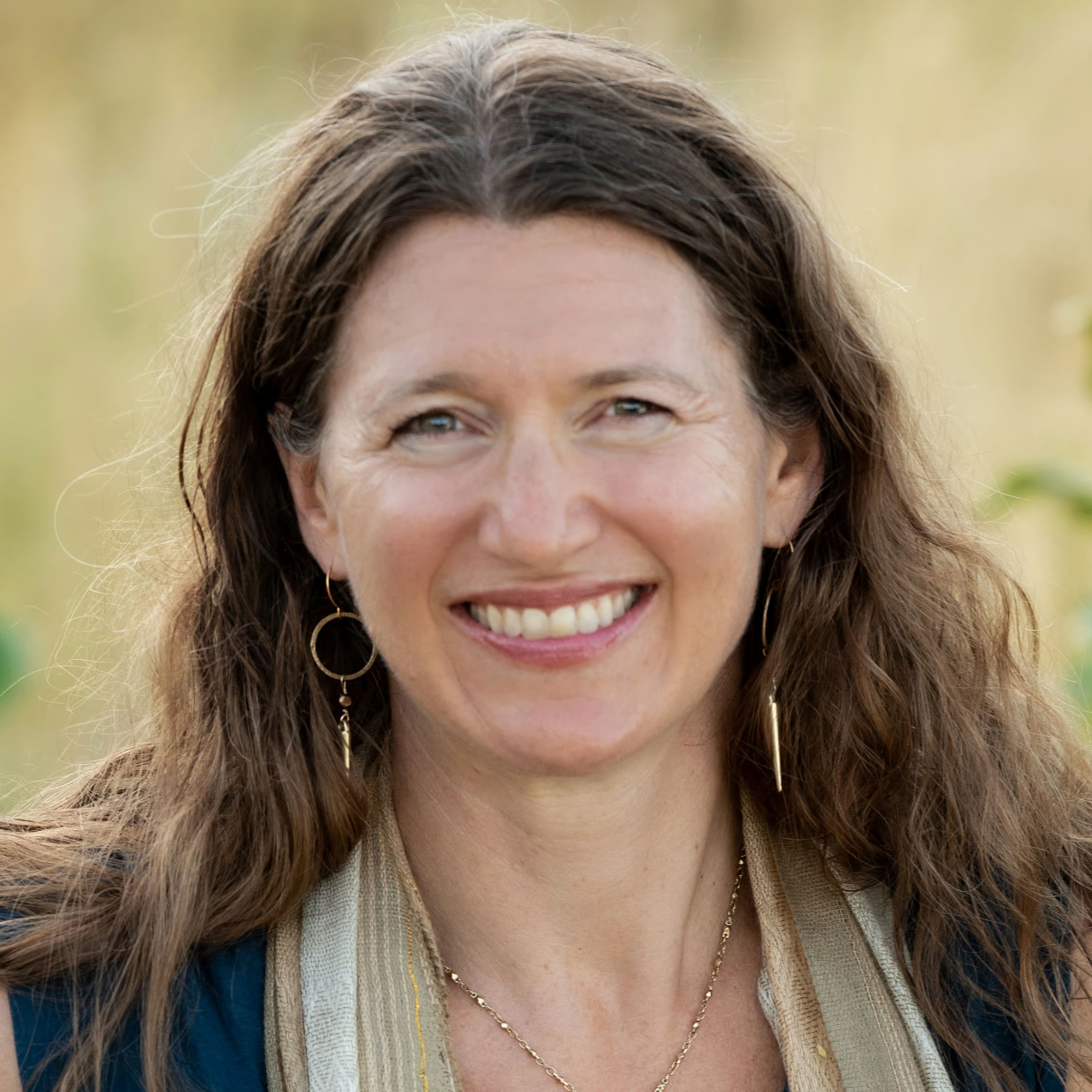
Arielle Schwartz, PhD, CCTP-II, E-RYT is a clinical psychologist, teacher, and certified Kripalu yoga instructor, who specializes in treating PTSD and complex trauma. She’s the author of eight books, including The Complex PTSD Workbook, EMDR Therapy and Somatic Psychology, The Post Traumatic Growth Guidebook, The Complex PTSD Treatment Manual, and Therapeutic Yoga for Trauma Recovery. She trains therapists in the application of EMDR, somatic psychology, parts work therapy, and mindfulness-based interventions in the treatment of trauma and complex PTSD. She’s the founder of the Center for Resilience Informed Therapy and teaches with the Polyvagal Institute.
Your female clients’ trauma didn’t happen in a vacuum. It happened in a culture shaped by patriarchy, racism, and the misuse of power. Yet most trauma treatment still places the burden of healing solely on individual survivors without taking systemic forces into account. Trauma treatment pioneer Judith Herman coined the term complex post-traumatic stress disorder to describe the kind of pervasive harm some clients face when abuse is built into systems meant to protect them. Drawing on Herman’s tri-phasic model of trauma recovery, this workshop reframes some forms of trauma as social and political responses. Discover a collaborative, justice-oriented approach that centers your clients’ voices and extends into the social systems that shaped their wounds. You’ll learn how to:
Tammy Nelson, PhD, is an internationally acclaimed psychotherapist, Board Certified Sexologist, Certified Sex Therapist and Certified Imago Relationship Therapist. She’s been a therapist for 35 years and is the executive director of the Integrative Sex Therapy Institute. On her podcast "The Trouble with Sex," she talks with experts about hot topics and answers her listeners' most forbidden questions about relationships. She’s a TEDx speaker and the author of several bestselling books, including Open Monogamy, Getting the Sex You Want, The New Monogamy, When You’re the One Who Cheats, and Integrative Sex and Couples Therapy.
What if the greatest threat to love isn’t conflict or even infidelity, but the distance between who we truly are and who we’ve learned to be to stay connected? The cost of abandoning authenticity to preserve attachment shows up in clients who’ve learned to protect connection by disconnecting from their emotional truth, erotic vitality, and embodied selfhood. In this workshop, you’ll explore the psychology of truth-telling, performance, secrecy, desire, and relational survival—and why the therapy room is one of the few remaining spaces where authentic truth-telling is possible. Drawn from attachment theory, trauma psychology, relational neuroscience, feminist theory, and decades of clinical work with couples and individuals, the framework you’ll explore will help you support clients working toward authenticity and emotional congruence. You’ll learn:
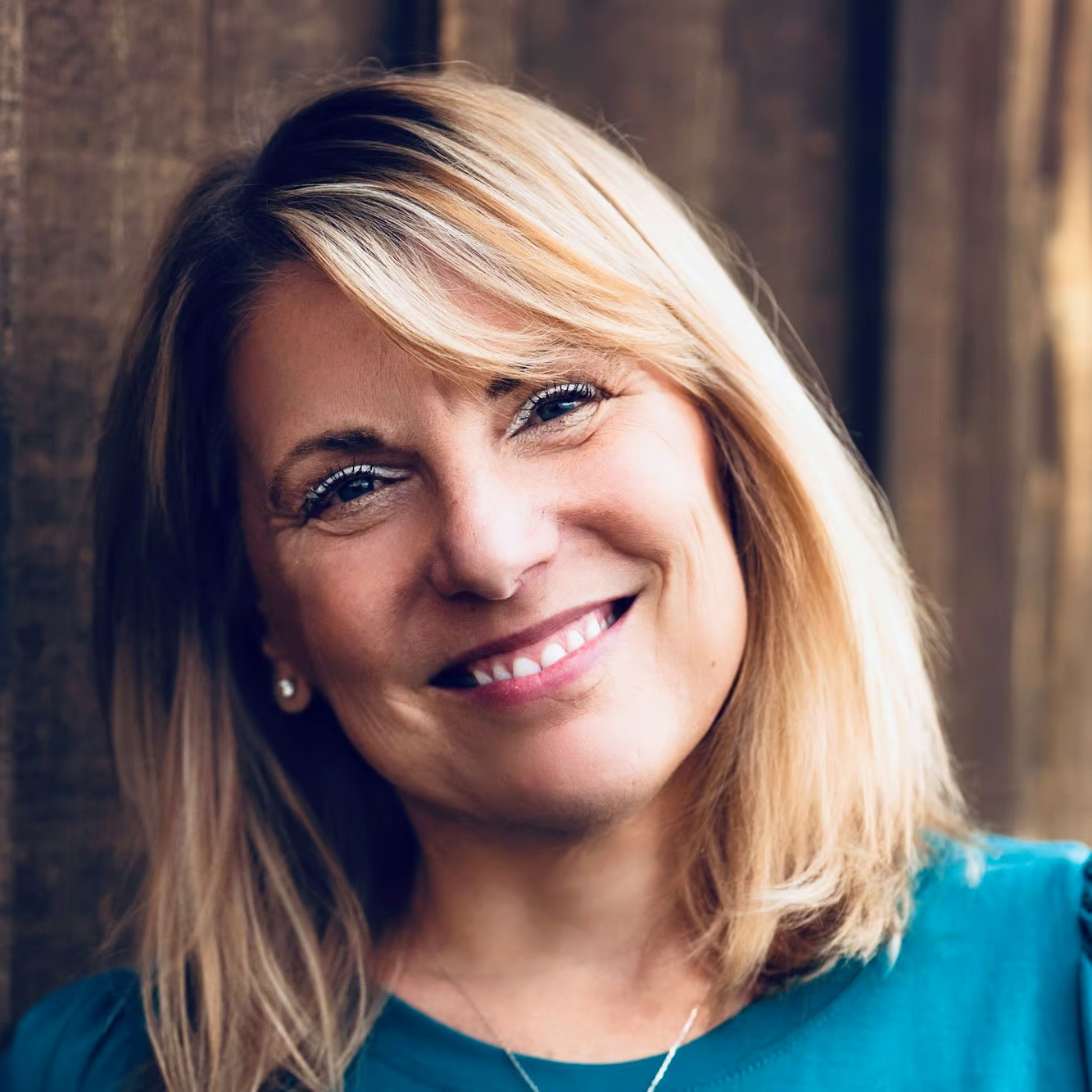
Stacy Ruse, LPC, ERYT-500, is a psychotherapist, international trainer, and author of IFS Made Simple: A Step-by-Step Guide to IFS Therapy. She specializes in integrating EMDR, IFS, and somatic approaches to trauma healing.
Why do some trauma survivors understand exactly what happened to them and still feel hijacked by fear, shame, body sensations, or relationship patterns? Trauma isn’t just in the story we tell. Distressing experiences can remain stuck in memory networks and continue to shape our present-day reactions, even with understanding and insight. Fortunately, EMDR is one of the most targeted, successful interventions when it comes to accessing these networks. In this workshop, we’ll use a combination of clinical examples and experiential demonstration to demystify EMDR, exploring practical ways to recognize unresolved trauma patterns and support regulation. Whether you’re new to EMDR or have training in it already, you’ll walk away with a greater understanding of how memory, the body, the nervous system, and protective parts intersect in trauma healing. You’ll also learn how to:
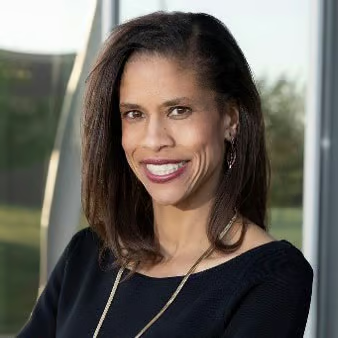
Katherine Helm, PhD, is a professor of psychology and director of graduate programs in counseling at Lewis University, as well as an author, public speaker, professional trainer, and clinical supervisor. She’s a couples therapist who also sees individuals in counseling, and has authored several publications about racial and cultural issues in mental health and couples’ issues. She’s had several on-air and on-screen media appearances, including a TEDx Talk on romantic relationships.
Working with Black couples requires more than just applying standard couples therapy techniques. Partners are often navigating unique relational stressors shaped by historical, cultural, systemic, and sociopolitical realities that influence attachment, communication patterns, coping strategies, and help-seeking behaviors. In this workshop, you’ll learn culturally responsive frameworks, evidence-based interventions, and relationally attuned skills that will help you work effectively with Black couples. Along the way, you’ll deepen your understanding of how relationship functioning and therapeutic engagement are shaped by racial stress and trauma, economic disparities, gender role socialization, intergenerational resilience, spirituality, extended family systems, and community values. You’ll discover how to:

Sarah Wayland, PhD, is the founder of Guiding Exceptional Parents. She provides neurodiversity-affirmative support, education, and community for parents of neurodivergent children, and educators. She’s the coauthor with Jamell White and Donna Henderson of Is This Autism?
Jamell White, PhD, LCSW-C has over 20 years of experience in clinical social work, with a background in special education and human development. She specializes in working with neurodivergent youth, adults, and their families.
Have you had clients who are desperately unhappy but seem to resist every strategy you offer, leaving you feeling stuck and blamed for their lack of progress? Your instinct might be to diagnose oppositional defiant disorder, a personality disorder, or “difficult family dynamics.” For many of these clients, though, what’s actually happening is a nervous system response to perceived demands—and treatment may require an approach that helps your client feel safe, while also centering their own agency. You’ll learn:
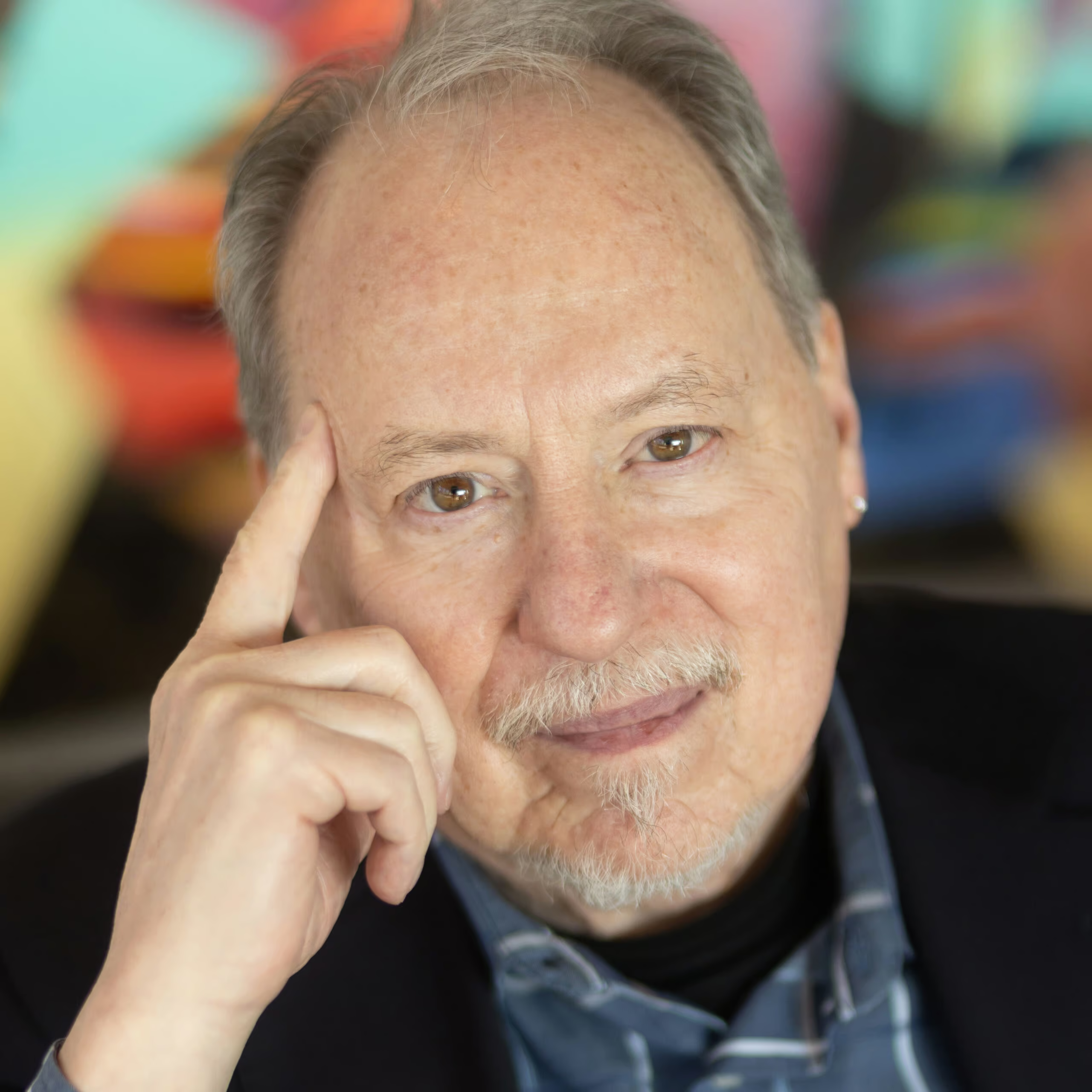
Andrew Tatarsky, PhD, is a psychologist, psychoanalyst, and trainer who’s worked with people who struggle with drugs and their families for over 40 years. He’s the developer of Integrative Harm Reduction Psychotherapy (IHRP) for risky and addictive behavior. He’s the author of Harm Reduction Psychotherapy: A New Treatment for Drug and Alcohol.
Most of us regularly see clients struggling with trauma, anxiety, depression, shame, relationship difficulties, and emotion dysregulation. But how many of us feel equally confident when those same clients struggle with addictive and compulsive behaviors—even though these behaviors are often meaningful attempts to cope with these very difficulties? In this workshop, you’ll learn a dignity-centered, evidence-based approach to addiction treatment: Integrative Harm Reduction Psychotherapy (IHRP). IHRP understands addictive and compulsive behavior not simply as symptoms to eliminate, but as meaningful attempts to manage suffering and meet important psychological, biological, and social needs. Through clinical examples and experiential exercises, you’ll learn how to use urges as opportunities for discovery, embrace ambivalence rather than struggle against it, and collaborate on realistic, personalized goals that help clients make positive changes at their own pace. You'll also learn:
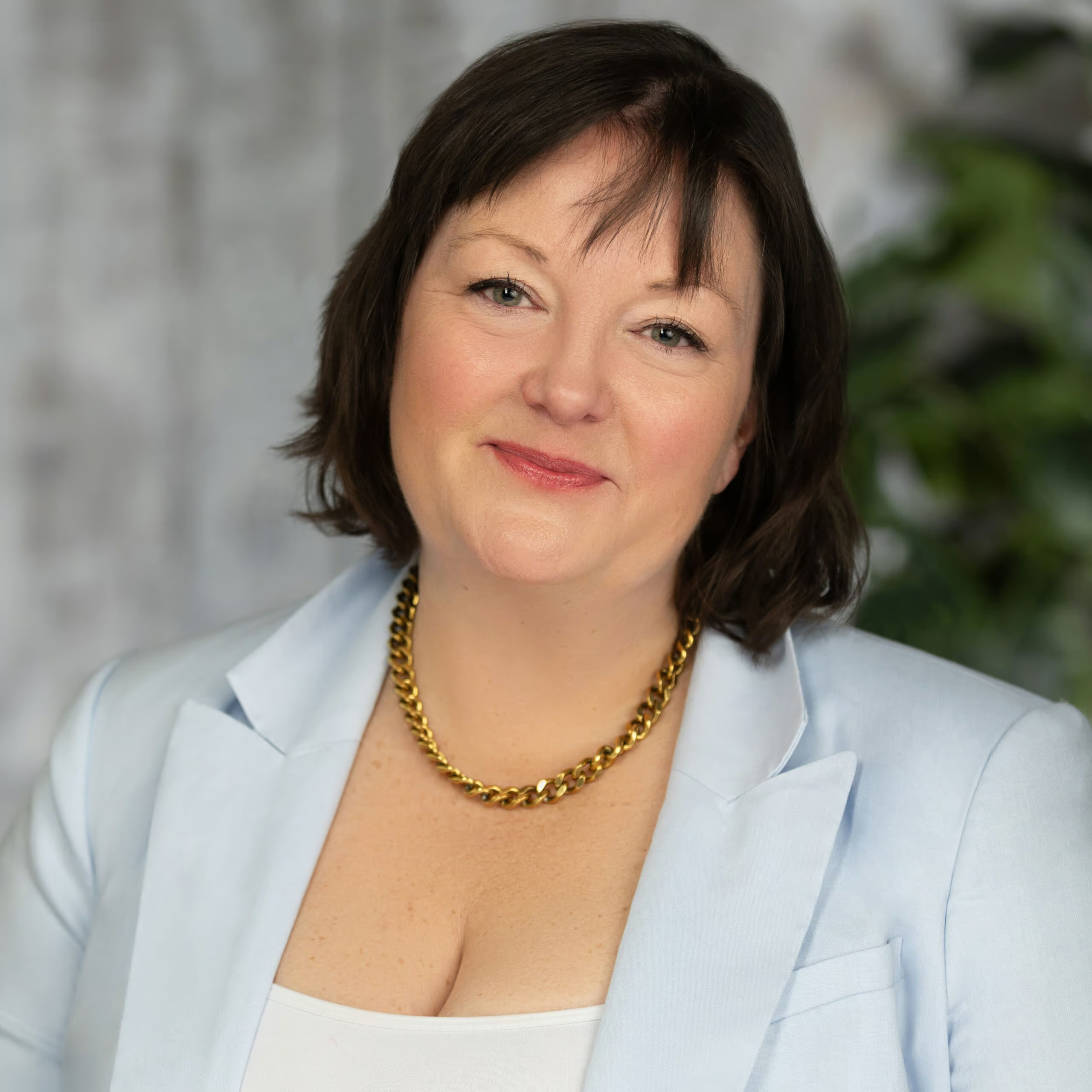
Meghan Riordan Jarvis, MA, LCSW, is a psychotherapist, two-time TEDx speaker, and host of the podcast Grief is my Side Hustle. A specialist in trauma, grief, and loss, she’s the creator of the Grief Mentor Method, which helps people adjusting to loss create personalized, grief-informed daily practices. She’s the founder of GREIFTASTIC Book Fair, as well as a board member for the Wendt Center for Loss and Healing and The New Normal Foundation. She’s the author of Can Anyone Tell Me?: Essential Questions About Grief and Loss, as well as End of the Hour: A Therapist’s Memoir, about her personal experience with PTSD after the deaths of her parents.
As therapists, we’re routinely exposed to stress, trauma grief, and increasing systemic. Over time, this can have a profound effect not only on our well-being but also our ability to stay present, attuned, and effective with clients. In this workshop, you’ll explore how burnout, compassion fatigue, and secondary traumatic stress show up in the therapy room and discuss practical, evidence-informed strategies for regulating nervous system activation before, during, and after sessions. You’ll leave with tools to support your own capacity while also helping clients better understand the connection between their own chronic stress, work demands, emotional labor, and physiological depletion. You’ll also explore:
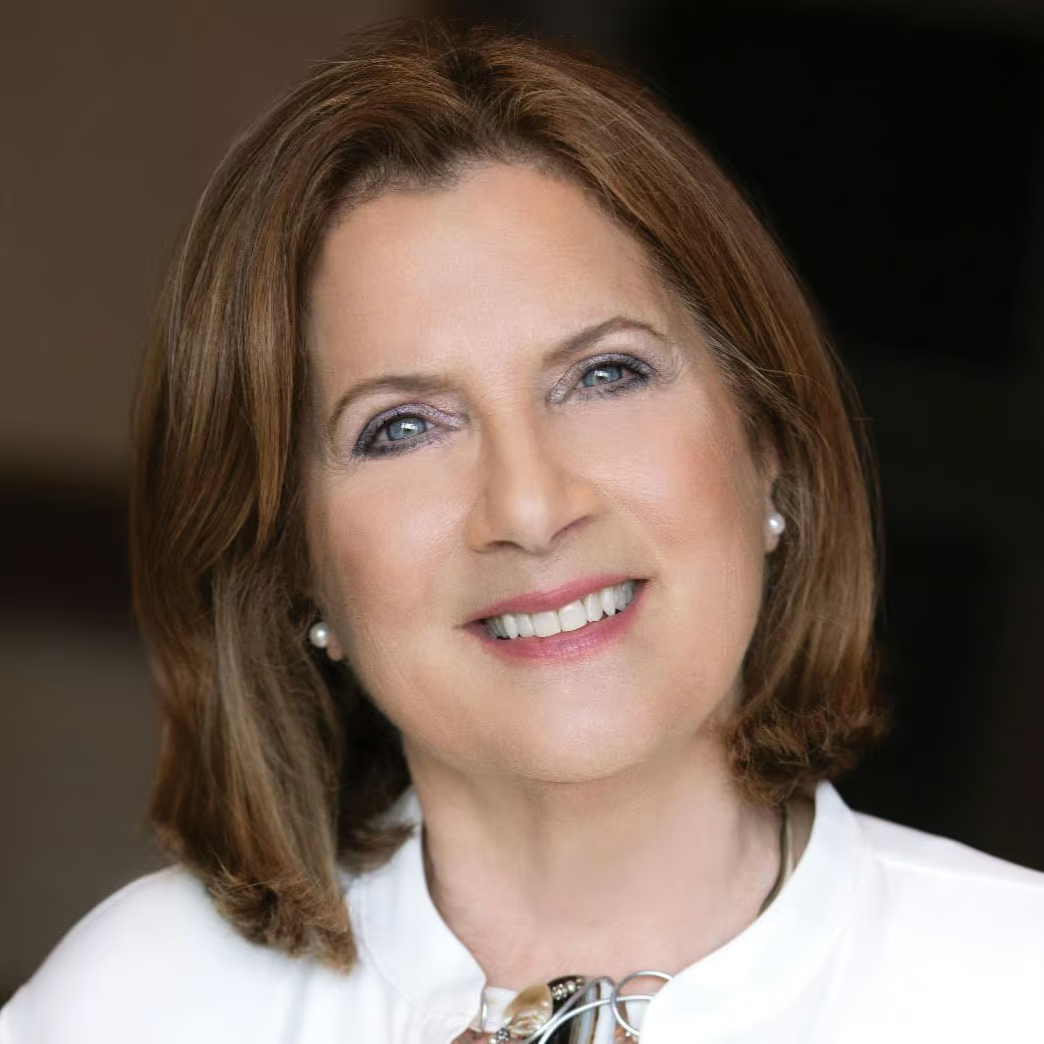
Mary Sise, LCSW, has over 25 years of experience integrating energy-based methods into trauma treatment. She’s the creator of the Trauma Reintegration Process, past president of the Association for Comprehensive Energy Psychology (ACEP), and coauthor of The Energy of Belief. She teaches internationally, blending brain science, energy psychology/tapping, and spiritual psychology to help clinicians guide clients into deep emotional healing and parts integration.
Why do some trauma clients remain stuck, despite excellent therapy? Often, it's because an aspect of themselves never realized the danger had ended. When trauma remains “frozen in time,” clients can become emotionally numb, reactive, disconnected from themselves, or unable to move forward despite their best efforts. In this highly practical workshop, you'll learn to recognize these trauma responses and apply somatic and energy psychology interventions that safely restore present-time awareness, nervous system regulation, and system-wide coherence. You’ll discover how to:
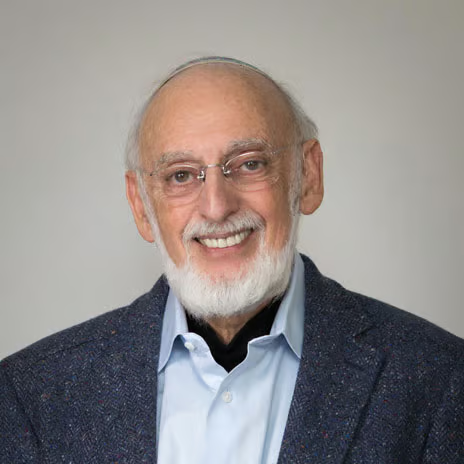
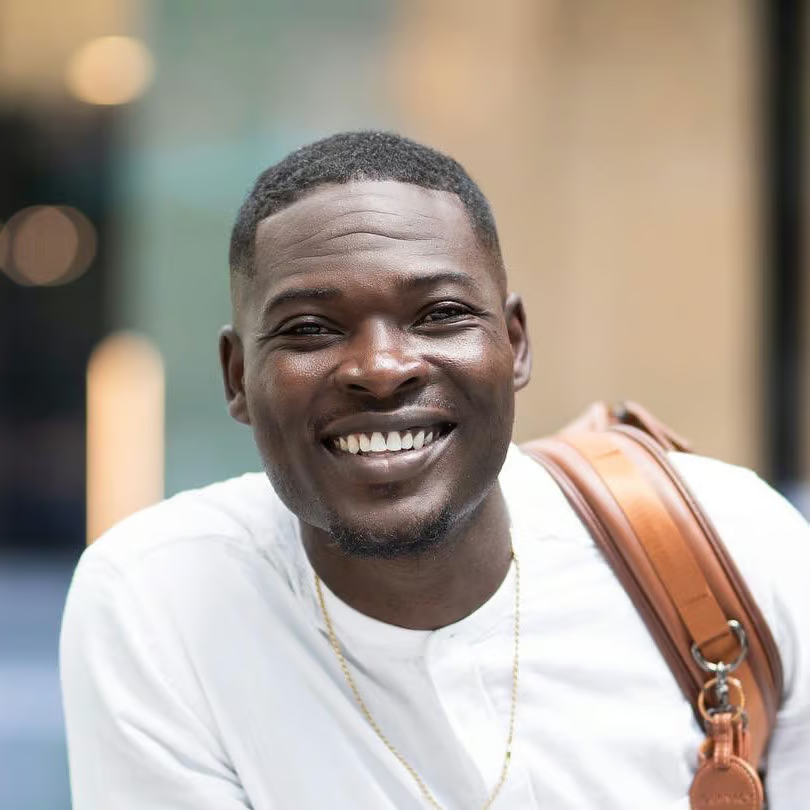
Modern masculinity is having an identity crisis. For many men, the old scripts around masculinity no longer fit, but the new ones aren't clear. The result can be a profound sense of disconnection, loneliness, and uncertainty about how to show up as a partner, father, and community member. So how do we help men move toward a version of masculinity that actually serves them and their relationships?
In this keynote conversation, we’re bringing together two influential voices in the field for a provocative exploration of what men need now, and how therapists can help them. First is legendary psychologist John Gottman, whose 50 years of groundbreaking research with thousands of couples has revolutionized the way therapists and non-therapists alike understand partnership, intimacy, and conflict.
Joining him is therapist Kier Gaines, a New York Times bestselling author and leading voice on modern masculinity, who shares his insights on relationships, fatherhood, and well-being with over 1.6 million Instagram followers and listeners of his acclaimed podcast, Learned the Hard Way.
Facilitated by EFT couples therapist and trainer George Faller, co-author of Brave Love, Great Sex, this talk bridges decades of research with a front-line view of the challenges facing men today—and how they’re impacting our therapy rooms, our families, our communities, and our culture at large.
We seem to be immersed in emotional immaturity these days. As therapists, we see it play out in family systems as dominance, control, and criticism—or passivity, avoidance, and emotional neglect. We notice how it shapes early childhood development and leaves us vulnerable to complex relational trauma. But when emotional immaturity shows up on a societal level—in leadership, policy, and the social media that pervades our lives—we reinforce even larger cycles of blame-shifting, defensiveness, and the avoidance of accountability. How do we cultivate emotional maturity in a culture that so often rewards its opposite?
In this illuminating keynote conversation, two of the field’s most respected experts in trauma and relational healing will explore how we can interrupt the cycle of emotional immaturity afflicting not only our families but our culture. The first is clinical psychologist Lindsay Gibson, the New York Times bestselling author of Adult Children of Emotionally Immature Parents, which has sold over 1.5 million copies and been translated into 38 languages. Her latest book, How to Raise an Emotionally Mature Child, is fast becoming a must-read in parenting circles and beyond. She’s joined by renowned somatic trauma therapist Arielle Schwartz, founder of the Center for Resilience Informed Therapy and author of eight seminal books on trauma, who traces how inherited trauma gets stored in the body long after the mind has moved on.
Together in a groundbreaking conversation moderated by the bestselling author of Raising Securely Attached Kids, Eli Harwood (aka Attachment Nerd), they’ll wrestle with the idea of “good enough” maturity and help us move toward a more vibrant, connected, and mature way of being in relationship with ourselves, our families, and the larger world.
We talk about narcissism as though it’s having a moment. But perhaps narcissism has always been of the moment, shaping everything from ancient myths and cinematic villains to modern-day leadership, digital culture, and even war.
With narcissism in all its forms so prevalent in our culture, why can it still be so difficult to see clearly? What happens when we become entangled with it? And how does it reshape our relationships and our sense of reality?
In this unique evening event, three people who’ve made it their life’s work to expose how narcissism operates will host a lively conversation you won’t want to miss.
Ramani Durvasula is one of the world’s leading clinical experts on narcissistic abuse. Her bestselling books, YouTube channel, trainings, and podcasts reach millions of survivors as well as therapists worldwide. Catherine Barrett is a sought-after clinical forensic psychologist who specializes in working with violent offenders and treating survivors of coercive control. Mark Vicente is the director of The Narcissist’s Playbook: Empathy Not Included, a documentary that takes viewers into an exploration of narcissistic tactics and the unsettling world of people who manipulate others without remorse.
Together, they’ll wrestle with how this film became a real-time record of the very dynamics it was investigating. It’s not necessary to have watched the film (it’s both compelling and disturbing) to get something out of this riveting event, as we’ll be featuring selected clips for discussion.
If you, a loved one, or a client has ever been caught in the confusing dynamics of a narcissistic relationship, this is a conversation you don’t want to miss! Seating for this dinner event is sure to sell out, so add it to your registration today.

Janina Fisher, PhD, is a licensed clinical psychologist and a former instructor at Harvard Medical School. An international expert on the treatment of trauma, she’s an Executive Board member of the Trauma Research Foundation and a Patron of the John Bowlby Centre. She’s the author of Healing the Fragmented Selves of Trauma Survivors: Overcoming Self-Alienation, Transforming the Living Legacy of Trauma: A Workbook for Survivors and Therapists, The Living Legacy Instructional Flip Chart, and Embracing Our Fragmented Selves: A Workbook for Trauma Survivors and Therapists, as well as numerous peer-reviewed journal articles. Her treatment model, Trauma-Informed Stabilization Treatment (TIST), is now being taught around the world.
Although most trauma treatment models prioritize working with the client’s most vulnerable parts, they often run into a common obstacle: being challenged by the client’s triggered protector parts. These are parts that hold significant emotional energy—and are often responsible for reenacting the unsafe environment of the client’s past. Because a child’s vulnerability is often exploited by abusers, protector parts have considerable difficulty trusting a therapist whose focus is on the grief and hurt of very young parts. In this workshop, you’ll learn a comprehensive, compassionate parts approach to trauma treatment, including how to work with the most destructive, verbally abusive, and suicidal parts based on understanding their unsafe behavior is intended to save survivors from overwhelm and powerlessness. You’ll discover strategies for allying with these protector parts, rather than fruitlessly trying to change their behavior, and you’ll walk away with a roadmap to help trauma survivors access their courage and strength to negotiate a lasting internal peace. You’ll also learn:

Shadeen Francis, LMFT, CST, is a board-certified sex therapist specializing in emotional intelligence and the intersection of sexual wellness and social justice. She's the President of the American Association of Sexuality Educators, Counselors, and Therapists (AASECT) and a subject matter expert for Essence, Hinge, the AARP, and Teen Vogue.
Whether you like it or not, your clients are already in relationships with AI, using it to process conflicts, draft self-reflections, seek real-time mental health support, and find companionship, even when they have fulfilling intimate relationships. While our field considers whether AI will replace us, a more immediate question is already sitting in our offices: how is AI reshaping our capacity to relate to one another? Like media literacy protects against persuasive advertising, AI literacy is a therapeutic antidote to the digital outsourcing of human connection. This workshop treats AI as clinical context to address where AI grows relational skills and where it atrophies them. You'll discover how to:
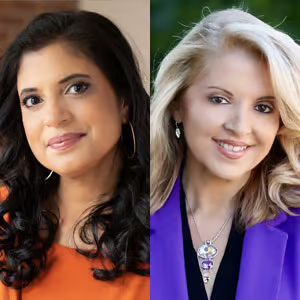
Ramani Durvasula, PhD, LCP, is a psychologist and the founder of LUNA Education, Training and Consulting, LLC. She’s professor emerita of psychology at California State University Los Angeles and the New York Times and International Bestselling author of It’s Not You: Understanding and Healing from Narcissistic Relationships, as well as Don’t You Know Who I Am: How to Stay Sane in the Era of Narcissism, Entitlement and Incivility and Should I Stay or Should I Go: Surviving a Relationship With a Narcissist. She’s developed a training program in conjunction with PESI on working with clients who’ve experienced narcissistic and other antagonistic relationships.
Wendy Behary, MSW, LCSW, is the founder and director of The Cognitive Therapy Center of New Jersey and The Schema Therapy Institutes of NJ-NYC-DC. She’s been treating clients and training and supervising therapists for more than 25 years. Currently, she’s the chair of the Schema Therapy Development Programs Sub-Committee for the International Society of Schema Therapy (ISST), as well as a former faculty member of the Cognitive Therapy Center and Schema Therapy Institute of New York, a founding fellow and consulting supervisor for The Academy of Cognitive Therapy, and past President of the Executive Board of the ISST. She’s the author of the international bestseller Disarming the Narcissist: Surviving and Thriving with the Self-Absorbed.
How to treat people with narcissism, and even whether you can make meaningful progress, is one of the hottest and most misunderstood topics in the field today. It’s also part of a burgeoning conversation about the importance of providing effective treatment for the partners, family members, and even colleagues of narcissistic individuals, who are often experiencing significant clinical distress because of the dynamics and behaviors of these relationships. In this workshop, two of the world’s leading clinical specialists on narcissism team up for the first time to help us understand this often-misunderstood personality style. You’ll unpack:
Lindsay C. Gibson, PsyD, has been a clinical psychologist in private practice for over thirty years and is the author of the New York Times bestseller Adult Children of Emotionally Immature Parents: How to Heal from Distant, Rejecting, or Self-Involved Parents and How to Raise an Emotionally Mature Child. Her books have been translated into 38 languages.
The deprivation and invalidation clients experience with emotionally immature caregivers is a form of relational trauma that can disrupt their sense of security and self-trust. Today’s success-driven culture further contributes to clients undervaluing “soft” needs for interdependent love, creativity, and spiritual connection. Many clients compensate by over-relying on pragmatism and intellectualization to avoid vulnerability, shame, and the uncertainty of emotional processing. While this may support outward achievement, it often results in anxiety, self-criticism, and doubts about one’s worth. In this workshop, you’ll explore how to help clients value and rely on the information provided by their own emotions and thereby find purpose beyond external measures of success and validation. You’ll learn to help clients:
James L. Hawkins II, PhD, is an ICEEFT Certified Trainer, supervisor, therapist, speaker, and educator whose work sits at the intersection of attachment science, neuroscience, and transformative relationship healing. He specializes in emotional reactivity, therapeutic presence, attachment injuries, trauma, and the complex dance of human relationships. A clinical coordinator for a nonprofit counseling practice in Arkansas and trainer of therapists worldwide in Emotionally Focused Therapy, he co-hosts The Leading Edge in Emotionally Focused Therapy podcast.
In an era marked by increasing social, political, racial, and cultural polarization, therapists are seeing the effects of societal division in the consulting room more and more—manifesting in increased anxiety, depression, traumatization, and feelings of helplessness and hopelessness. Even though we recognize the importance of discussing these forces, knowing how and where to begin is tricky. In this workshop, you’ll learn a step-by-step process for initiating and navigating difficult conversations about the impact of current events with couples, families, and community groups. Integrating attachment-based principles, Emotionally Focused Therapy techniques, and systems theory, along with clinical examples, demonstrations, and experiential exercises, you’ll learn how to bolster your existing relational skills to help clients engage in these difficult conversations with a greater sense of safety, curiosity, and emotional responsiveness. You’ll leave with a framework that empowers clients to engage in meaningful conversations, both in and outside of the therapy room. You’ll also discover:
Deb Dana, LCSW, is a clinician, author, speaker, and internationally recognized expert on the clinical application of Polyvagal Theory. Through her work, she plays a critical role in advancing the application of Polyvagal-informed approaches in clinical settings. She’s well known for her ability to translate the complexities of Polyvagal Theory into accessible, client-centered interventions. Through her Rhythm of Regulation methodology, she’s introduced tools and practices that empower professionals and individuals alike to understand their nervous systems and change the way they navigate their daily lives.
Whether you’re doing couples therapy or individual therapy, the people you’re helping build healthier, more secure relationships are already having a wordless conversation, one that unfolds outside of conscious awareness. Their nervous systems are scanning for signals of safety and danger, reaching out for connection or retreating into familiar pathways of protection. So what if the distress they’re feeling isn’t actually about what’s being said or not being said, but about two nervous systems seeking connection? In this workshop, you’ll explore ruptures and repair through a nervous system perspective, learn how to help clients understand their own autonomic profiles, and develop strategies for staying curious about their states instead of defaulting to familiar protective responses. You’ll also learn how to:
Dan Siegel, MD, is the founder and director of education of the Mindsight Institute and founding codirector of the Mindful Awareness Research Center at UCLA, where he was also coprincipal Investigator of the Center for Culture, Brain and Development and clinical professor of psychiatry at the School of Medicine. An award-winning educator, he’s the author of five New York Times bestsellers and over 15 other books. As the founding editor of the Norton Professional Series on Interpersonal Neurobiology (IPNB), he’s overseen the publication of over 100 books in the transdisciplinary IPNB framework.
Sally Maslansky, LMFT, is a psychotherapist and author whose lived experience with Dissociative Identity Disorder (DID) profoundly informs her clinical work and writing. Diagnosed in her mid-30s, she worked in therapy with Dan Siegel, receiving treatment grounded in Interpersonal Neurobiology (IPNB), Attachment Theory, and mindful awareness practices.
How can you bring a transformative combination of hope, healing, and personal reinvention to your therapy practice? These are cornerstones of the revolutionary, multidisciplinary approach known as interpersonal neurobiology (IPNB), and in this workshop, you’ll learn how to bring these qualities to your own work, guided by psychotherapist and author Sally Maslansky and her former therapist, IPNB developer Dan Siegel. Through moving stories of survival and recovery, they’ll share the different sides of a therapeutic journey from a diagnosis of dissociative identity disorder to healing and a fuller sense of self. They'll explore how dynamic IPNB approaches can treat trauma and dissociated self-states not from the perspective of symptom management, but from a place of flexibility and hope. You’ll learn:
William Doherty, PhD, is a professor emeritus at the University of Minnesota and cofounder of Braver Angels, a nonprofit working to depolarize America. His books include The Ethical Lives of Clients: Transcending Self-Interest in Psychotherapy and Helping Couples on the Brink of Divorce: Discernment Counseling for Troubled Relationships (with Steven Harris).
In the toxic polarization of our society, most of us stay focused on our traditional work of personal healing, trying to steer clear of the struggles in our wider culture. But that outside world keeps impinging on our clients’ lives—and our own. Immigration crackdowns, wars, economic fallout, climate grief, anxiety over AI—the troubling list is long. As therapists, we face a choice: stay focused on individual healing and leave the wider world at the door, or apply a larger therapeutic vision to the problems of our society. In this workshop, you’ll explore what it would mean to embrace a larger vision for your role as a therapist. You’ll discover how to:
Britt Rathbone, LCSW-C, was one of the first clinicians in the country to be certified by the DBT-Linehan Board of Certification and leads a DBT team in Maryland. He’s the coauthor of What Works with Teens, Dialectical Behavior Therapy for At-Risk Adolescents, and Parenting a Teen Who Has Intense Emotions.
Sami Ascanio, LCSW-C, is certified by the DBT-Linehan Board of Certification and is the team leader of a certified DBT team. She is one of two lead clinicians on the Psychwire Course: Applied DBT Skills for Neurodivergent Individuals.
What if there was a tool that could not only save you time when working with challenging behaviors, but result in better outcomes? Any clinician who’s worked with crisis behaviors knows how they can hinder treatment. But many clinicians continue to struggle to identify why, despite their solid interventions, these behaviors don’t improve. Luckily, the behavior chain analysis offers an excellent, effective means of identifying the causes of behavior and the factors that maintain them. Even those who think they know this tool well may be surprised to find that they’re overlooking key elements. In this workshop, we’ll use case examples and role-playing to show how the behavior chain analysis can unlock exciting opportunities to target treatment with more precision and better outcomes. You’ll explore:
Sahaj Kaur Kohli, MAEd, LPC, NCC, is a therapist, writer, international mental health educator and speaker, and the founder of Brown Girl Therapy, the first and largest mental health community for children of immigrants. She’s the author of But What Will People Say?: Navigating Mental Health, Identity, Love, and Family Between Cultures. She also writes the Washington Post advice column "Ask Sahaj" and hosts the podcast So We Have Been Told.
Guilt is one of the most common emotions therapists encounter, yet it’s often understood as a sign of personal wrongdoing, excessive responsibility, or distorted thinking. While that may be true for some clients, for many others guilt reflects something different: competing loyalties, deeply held values, family expectations, cultural obligations, and the emotional cost of change. In this workshop, you’ll learn a culturally responsive framework for understanding and working with guilt, using real case studies, experiential exercises, and practical therapeutic tools. You’ll explore strategies that help clients move from automatically obeying guilt to understanding what it’s protecting, responding to it intentionally, and carrying it in ways that align with their values and relationships. You’ll also discover how to:
Laurie Mintz, PhD, is an emeritus professor, author, therapist, and speaker. At the University of Florida, she taught the Psychology of Human Sexuality to thousands of undergraduate students. She’s also the author of a self-help book for women with diminished desire, A Tired Woman's Guide to Passionate Sex: Reclaim Your Desire and Reignite Your Relationship.
“I never feel horny anymore. I could care less if I ever have sex again!” This might sound like an unusual or uncommon problem, but the reality is that nearly 40 percent of women are experiencing diminished sexual desire. However, they’re unlikely to ever share this information with their therapist unless asked about it directly. In this workshop, you’ll learn why so many women have lost interest in sex—and why asking about sex should be an integral part of your practice. You’ll not only learn to develop greater comfort discussing sexual issues, but evidence-based sex therapy strategies for diminished desire, like mindful sex and scheduling sexual encounters. You’ll walk away able to implement a plethora of concrete therapy strategies and techniques that will help your female clients reclaim desire and enjoy sex again. You’ll also discover:
Megan Anna Neff, PsyD, is a clinical psychologist, the founder of Neurodivergent Insights, and the author of Self-Care for Autistic People and The Autistic Burnout Workbook, and the upcoming AuDHD Unlocked.
Chances are that there are clients in your office being treated for anxiety, depression, OCD, PTSD, or bipolar disorder while the thing underneath is undiagnosed AuDHD. Until 2013, the DSM barred clinicians from diagnosing autism and ADHD together, so the field is only now catching up to what AuDHD looks like in the therapy room. Autism and ADHD are also often missed in women, gender-expansive people, and racialized people. And when autism and ADHD show up together, they interact in ways that produce routinely misunderstood contradictions. In this workshop, you'll learn to formulate these contradictions as paradoxes where each side of the AuDHD neurology solves a different problem, and rethink how anxiety, depression, and OCD grow in AuDHD clients. You'll discover how to:
Terry A. Casey, PhD, is a Licensed Psychologist who conducts CE programs on ethical, legal, and practice issues across the country and has taught ethics in professional counseling at the graduate level for 18 years. He also maintains a private consulting practice near Nashville, Tennessee.
As you’ve probably heard, the ACA Code of Ethics is being revised—and if you’re not prepared for what’s changing, you may put yourself at serious risk professionally. Educating yourself about the revised 2027 code can prevent ethics complaints, licensing board actions, and civil liability. Get ahead of those risks in this lively workshop (yes, ethics can be fun!). You’ll be the first to get crucial information on the most significant changes in the Code and the implications for clinical practice, organizational policies, and operational procedures, equipping you with all you need to practice with confidence in a changing ethics landscape. You’ll learn to:
Yasmine Saad, PhD, is a licensed clinical psychologist, a TEDx Editor’s Pick speaker, and the founder and CEO of Madison Park Psychological Services. A former Assistant Professor of Psychiatry and Behavioral Sciences at Albert Einstein College of Medicine, her work has been featured in more than 200 media outlets, including CNN, BBC, The Wall Street Journal, Forbes, and USA Today.
When a client tells them only one thing: “I’m lonely,” or “I’m sad,” or “I’m not good enough,” most therapists would ask for more information before deciding what it means or where to go next. But what if one thought or emotion could serve as a roadmap—revealing a client’s present state, desired future, motivational patterns, and obstacles to change? In this interactive workshop, you’ll learn a process for decoding thoughts and emotions to uncover a wealth of hidden information about the person behind the symptom. Through case examples and guided exercises, you’ll learn how to put this information to work to deepen your understanding of clients, determine your next therapeutic step, and create lasting change for them. You’ll discover:
Stacy Ruse, LPC, ERYT-500, is a psychotherapist, international trainer, and author of IFS Made Simple: A Step-by-Step Guide to IFS Therapy. She specializes in integrating EMDR, IFS, and somatic approaches to trauma healing.
Why do some trauma survivors understand exactly what happened to them and still feel hijacked by fear, shame, body sensations, or relationship patterns? Trauma isn’t just in the story we tell. Distressing experiences can remain stuck in memory networks and continue to shape our present-day reactions, even with understanding and insight. Fortunately, EMDR is one of the most targeted, successful interventions when it comes to accessing these networks. In this workshop, we’ll use a combination of clinical examples and experiential demonstration to demystify EMDR, exploring practical ways to recognize unresolved trauma patterns and support regulation. Whether you’re new to EMDR or have training in it already, you’ll walk away with a greater understanding of how memory, the body, the nervous system, and protective parts intersect in trauma healing. You’ll also learn how to:
John Gottman, PhD, is a renowned psychologist, researcher, and co-founder of The Gottman Institute. Widely considered one of the world’s foremost experts on relationships, he’s authored over 200 published articles and more than 40 books, including The Seven Principles for Making Marriage Work. His groundbreaking work on marital stability and divorce prediction has been recognized with numerous national awards, and his research has revolutionized the field of couples therapy.
Julie Schwartz Gottman, PhD, is a clinical psychologist, co-founder of The Gottman Institute, and co-creator of Gottman Method Couples Therapy. An internationally respected expert on relationships, trauma recovery, and parenting, she’s co-authored numerous influential books and led innovative research on relational health. Her work has helped shape best practices for healing after infidelity, and she’s widely celebrated for her compassionate, research-based approach to strengthening relationships.
Whether emotional or sexual, romantic betrayal can feel like the kryptonite of relationship health, paralyzing partners and leaving even experienced clinicians uncertain about how to help. In this workshop, the Gottmans present findings from the first-ever six-year randomized controlled study of treatment for couples distressed by infidelity. You’ll be introduced to an evidence-based protocol, grounded in Gottman Method Couples Therapy, for helping couples successfully navigate the aftermath of an affair and emerge stronger, closer, and more resilient. You’ll learn to:
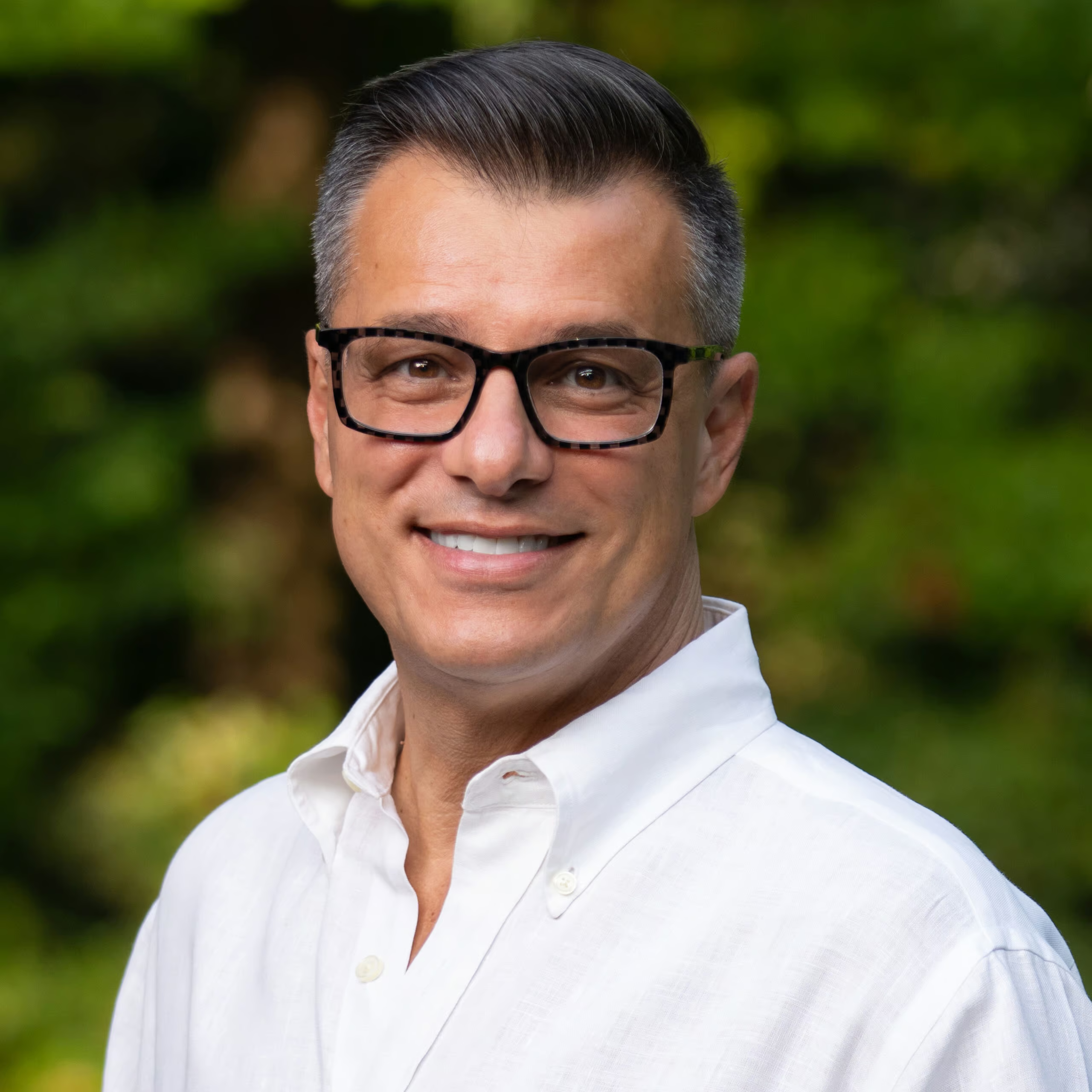
Frank Anderson, MD, is a world-renowned trauma treatment expert, Harvard-trained psychiatrist, and psychotherapist. He’s the acclaimed author of To Be Loved and Transcending Trauma, and coauthor of Internal Family Systems Skills Training Manual. As a global speaker on the treatment of trauma and dissociation, he’s passionate about teaching brain-based psychotherapy and integrating current neuroscience knowledge.
Most clinicians can easily spot the signs of overt abuse. But recognizing and treating the effects of passive abuse, in all its forms, requires a different kind of skillset. Whether it’s emotional neglect, withdrawal, chronic invalidation, withholding, or relational abandonment, passive abuse is often harder to name—yet its effects on attachment, self-worth, emotional development, and relationships is profound. In this workshop, we’ll examine the survival strategies that often develop in response to chronic disconnection, including reactivity, shutdown, self-blame, difficulty trusting, and repeated relational patterns. You’ll learn how to recognize passive abuse and neglect experiences that are often minimized or overlooked, assess their lasting impact, and support your clients as they move toward healing. You’ll also learn:
David Kessler, MA, RN, FACHE, is one of the world’s foremost experts on grief and the founder of Grief.com. He leads grief certification programs for professionals and online groups for those in grief. He’s the author of seven books, including Finding Meaning and his newest, Finding Meaning Workbook: Tools for Releasing Pain and Remembering with Love, as well as the coauthor of several books with Elisabeth Kübler-Ross and Louise Hay.
Paul Denniston, RYT 500, is the founder of Grief Yoga, which he teaches to counselors, psychologists, and healthcare professionals. He certifies other yoga teachers in the Grief Yoga Teacher Training. He’s also the author of the bestselling book Healing Through Yoga: Transform Loss into Empowerment.
Every therapist has them: the clients who've done the work and processed the memories—and still feel stuck. How can this be? Often, we treat the trauma, but miss what lives underneath it: the grief for what was lost, what never happened, and who the client had to become to survive. Clients experiencing traumatic grief are responding to something they weren't prepared for, manifesting in intrusive images, overwhelming guilt, a loss of self, isolation, and more. When it goes unrecognized, even the best trauma treatment stalls. In this workshop, you’ll learn how to recognize the grief that underlies all trauma in the body, as well as how to work with it. You'll discover:
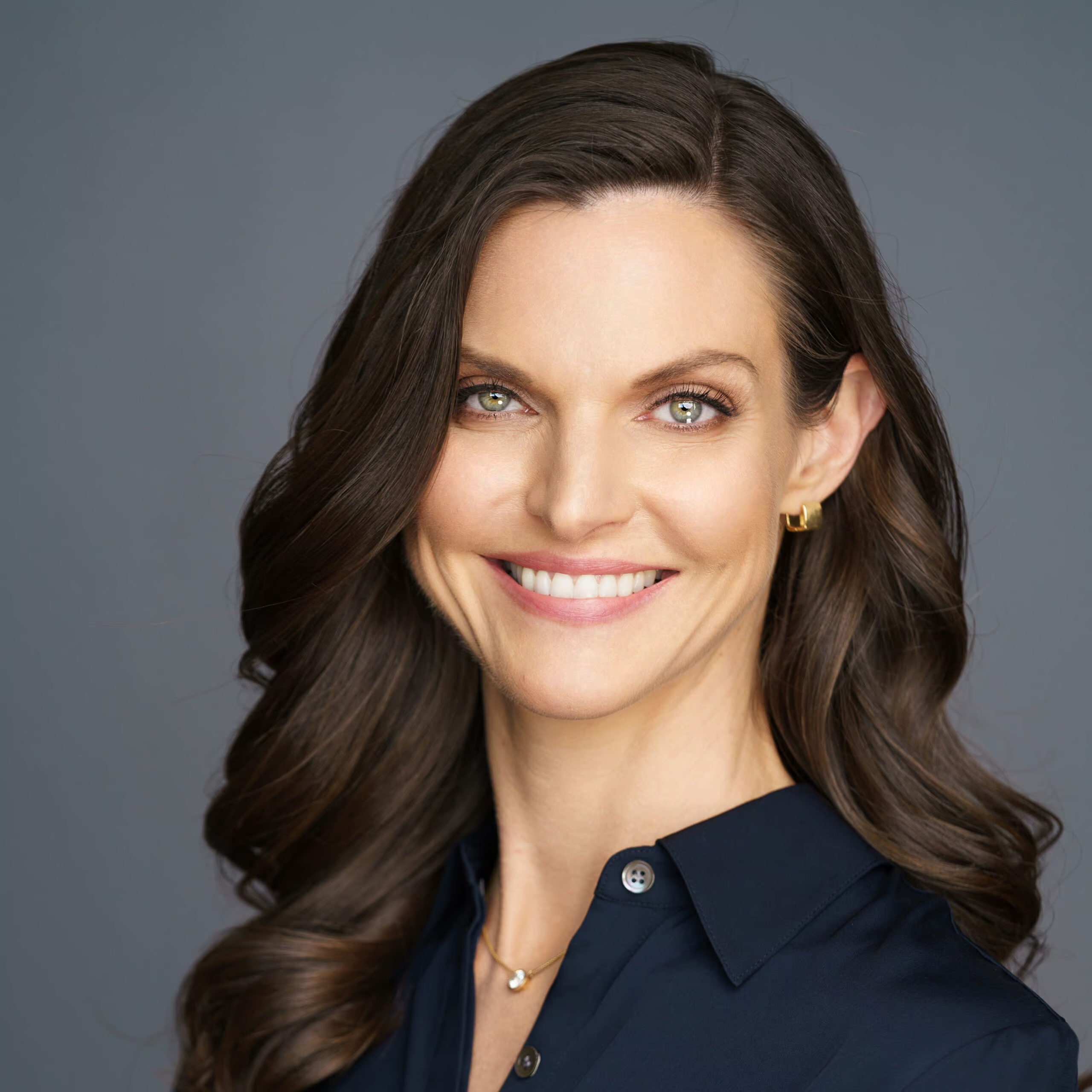
Kate Truitt, PhD, MBA, is a clinical psychologist, applied neuroscientist, and international educator whose work covers trauma, chronic stress, grief, and long seasons of survival. She’s the creator of the NeuroTriad Model and Brain Partnership, integrative frameworks that draw from affective neuroscience, psychophysiology, interoception, and experience-dependent neuroplasticity, as well as the founder of the Truitt Institute, CEO of Dr. Kate Truitt & Associates, and leader of the Amy Research Foundation (501c3). She’s the bestselling author of Healing in Your Hands: Self-Havening Exercises to Harness Neuroplasticity, Heal Traumatic Stress, and Build Resilience, Keep Breathing: A Psychologist’s Intimate Journey Through Loss, Trauma, and Rediscovering Life, The NeuroTriad Model: Principles and Practice, and The Brain Partnership Toolbox for Addiction, Mental Health, and Trauma Treatment Professionals.
Every therapist has experienced this moment: your client understands the pattern, wants to change, has done the work, and still keeps shutting down, pulling away, bracing, flooding, fawning, intellectualizing, or returning to the same survival loop. It can look like resistance. It can feel like avoidance. And it can leave even the most skilled clinician wondering whether to push, pause, interpret, stabilize, or start over. In this workshop, you’ll learn to reframe the “stuck trauma client” through an applied neuroscience lens. Drawing from trauma-informed neuroscience, interoception, autonomic regulation, and neuroplasticity, you’ll explore how “resistance” is often the nervous system protecting the client from change it doesn’t yet experience as safe. Rather than overpower this protection or accommodating avoidance, you’ll learn a compassionate approach that helps you understand and partner with it while helping the client build enough safety, regulation, and agency to move forward. You’ll discover:
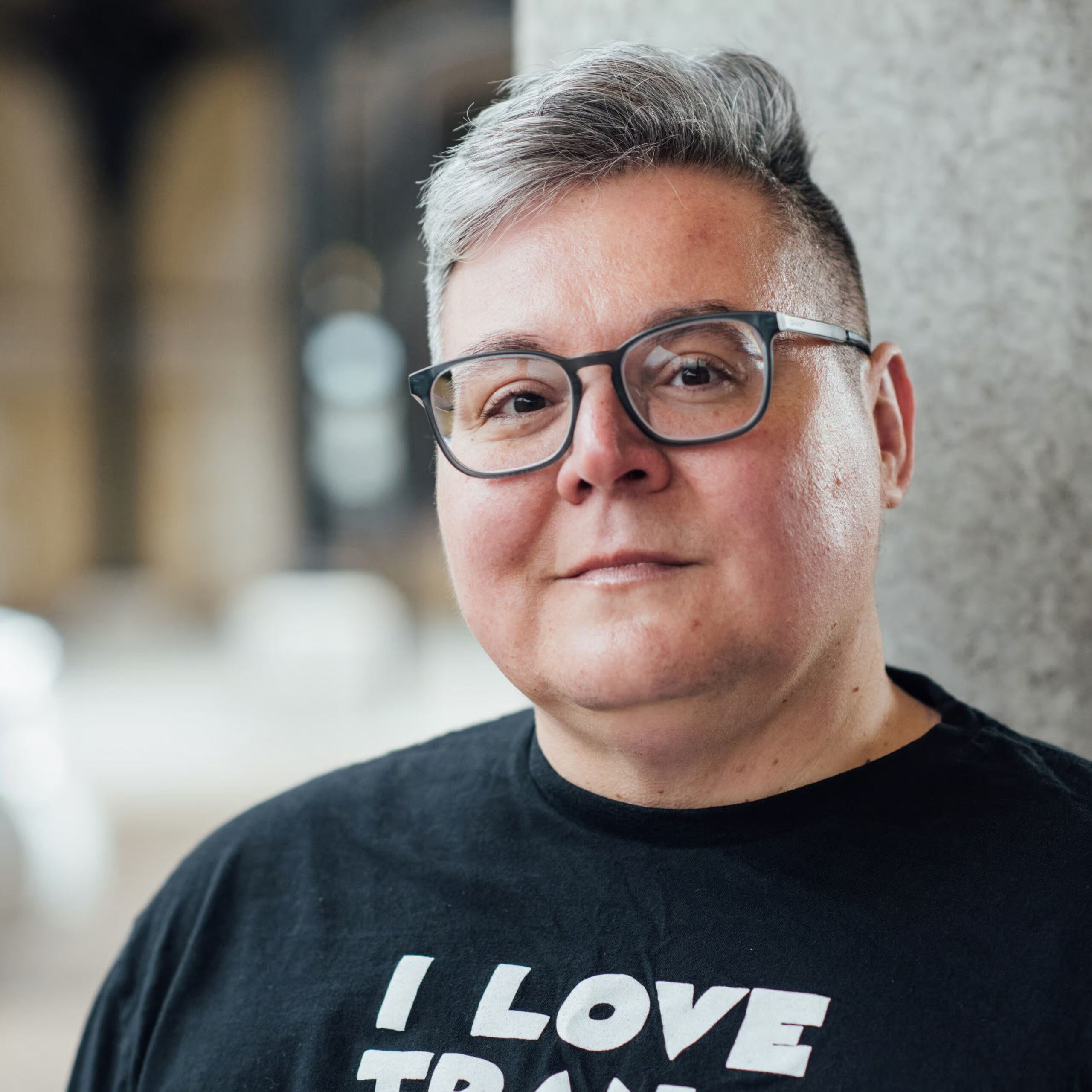
Alex Iantaffi, PhD, MS, SEP, CST, CST-S, LMFT (they/he/lui) is an award-winning author, cultural worker, internationally renowned speaker, podcaster, sex and relationship therapist, and Somatic Experiencing practitioner.
Gen Z is the queerest generation on record, yet most relationship therapy models still assume a cisgender, heterosexual, monogamous client. And with one in four adults—both queer and heterosexual—exploring non-monogamy, it’s more vital than ever for therapists to develop competence working with a broad range of relational, sexual, and erotic orientations. In this workshop, you’ll explore how moving beyond a dyadic model toward a truly systemic approach can benefit all your clients, not just those with minoritized relational, sexual, and erotic orientations. You’ll learn:
Sara Nasserzadeh, PhD, is an award-winning author, social psychologist, psychosexual therapist, and relational psychotherapist who teaches advanced clinical skills and helps people create thriving systems while serving as a senior cultural and relational advisor to Fortune 500 companies and UN agencies across forty countries. She’s the author of Love by Design: 6 Ingredients to Build a Lifetime of Love, and the recipient of the 2026 Vanguard Award from Psychotherapy Networker. Featured on NPR, BBC, and The New York Times, she holds cross-continental clinical credentials (AASECT, COSRT, UKCP), and her TED talk has been viewed by thousands.
For decades, our field has mapped how people bond. Far less attention has gone to the mirror process: how we detach or let go. Yet endings are everywhere in clinical work in the terms of planned terminations, sudden dropouts, ruptures, life transitions, and the losses that bring clients through our doors in the first place. Detachment has no equivalent clinical map, even though the ways people end relationships is as patterned, and learnable, as the ways they form them. This workshop introduces a practical framework of seven ending styles, each with its own emotional signature, characteristic costs, and clinical opportunities. You’ll learn about your own style and how to work intentionally with all ending styles, turning what’s so often avoided, rushed, or left unspoken into powerfully transformative and therapeutic work. You’ll discover how to:
Wendy Behary, MSW, LCSW, is the founder and director of The Cognitive Therapy Center of New Jersey and The Schema Therapy Institutes of NJ-NYC-DC. She’s a founding fellow and consulting supervisor for The Academy of Cognitive Therapy, past president of the Executive Board of the ISST, and the current president of the Executive Board of the Jeffrey Young Schema Therapy Association. She’s the author of the international bestseller Disarming the Narcissist: Surviving and Thriving with the Self-Absorbed, and Deliberate Practice in Schema Therapy.
A cruel paradox of good therapy is that it often triggers our clients’ inner critic. As clients make sense of their early emotional narratives, unmet needs, and lifelong schemas, many are vulnerable to getting hijacked by a relentlessly harsh inner voice that fans the flames of resentment, shame, regret, and self-doubt. The louder it gets, the more clients struggle to trust their own judgment. Sometimes, the very growth they achieve is overshadowed by activated feelings of foolishness and weakness. In this workshop, you’ll explore powerful schema therapy strategies—like empathic confrontation, leveraging the narrator voice, and mode mindfulness—to disarm the inner critic and help clients move through necessary grief toward self-acceptance and a more sustainable healthy adult mode. You’ll learn to:
Mary Sise, LCSW, has over 25 years of experience integrating energy-based methods into trauma treatment. She’s the creator of the Trauma Reintegration Process, past president of the Association for Comprehensive Energy Psychology (ACEP), and coauthor of The Energy of Belief. She teaches internationally, blending brain science, energy psychology/tapping, and spiritual psychology to help clinicians guide clients into deep emotional healing and parts integration.
Why do some trauma clients remain stuck, despite excellent therapy? Often, it's because an aspect of themselves never realized the danger had ended. When trauma remains “frozen in time,” clients can become emotionally numb, reactive, disconnected from themselves, or unable to move forward despite their best efforts. In this highly practical workshop, you'll learn to recognize these trauma responses and apply somatic and energy psychology interventions that safely restore present-time awareness, nervous system regulation, and system-wide coherence. You’ll discover how to:
Daphne Fatter, PhD, is a licensed psychologist, clinical consultant, author, and international speaker specializing in integrative trauma-informed therapies. She’s the author of Integrating IFS into EMDR Therapy and Part of Me Wants to Leave, Part of Me Wants to Stay. She is EMDR-certified, an EMDRIA-approved consultant, and has over 20 years of experience providing trauma treatment.
Currently, IFS is one of the most popular approaches to working with a client’s, vulnerable, often conflicted inner parts. However, it’s critical to apply a trauma-informed lens in IFS work. A clinician who mistakes a protector for an exile can flood a trauma survivor in a single session. In this workshop, you’ll what the research tells us about traumatic stress as it applies to the IFS road map. Through case examples, experiential exercises, and video demonstrations, you’ll practice developing your “parts detector,” so you can assess which of a client’s parts is present and what it needs from you. You’ll also learn about memory reconsolidation as a proposed mechanism of change in IFS. You’ll discover:
Sally Spencer-Thomas, PsyD, is a clinical psychologist and internationally recognized expert in suicide prevention and postvention. She’s the cofounder of United Suicide Survivors International and has led pioneering efforts to engage lived experience in mental health solutions. Her eight-session clinical model, Navigating the Tsunami After Suicide, is built upon years of collaboration with researchers, survivors, and global leaders in postvention.
Supporting clients who’ve been impacted by suicide—whether they’ve lost a loved one, survived an attempt, or live with chronic suicidal thoughts—requires more than good intentions; it demands deep ethical reflection and culturally attuned practices. But the intense isolating and traumatizing experience that accompanies suicide can leave clinicians feeling overwhelmed, and liability fears and unconscious bias can silently compromise the therapeutic alliance. In this workshop, we’ll explore the evolving ethical landscape of suicide-informed care, drawing from contemporary ethics frameworks, cultural humility practices, and lived experience perspectives. By the end, you’ll walk away with tools that will help you safely, respectfully, and competently give support. You’ll also learn:
Jessica VanderWier is a psychotherapist, founder and CEO of Nurtured First. One of the most trusted voices in modern parenting, she blends clinical expertise with research on child development and reaches millions of families worldwide through her platform, keynote speaking, and podcast Robot Unicorn.
Raising a neurodivergent child can be deeply rewarding, but it can also bring significant emotional, relational, and practical challenges. That’s why the parents of neurodivergent children often come to us running on empty. They feel chronically stressed, isolated, and burnt out from navigating complex systems. They love their children deeply, but loving doesn’t make the load they carry any lighter. This workshop explores what clients who are parents of neurodivergent children—and sometimes neurodivergent themselves—need most, giving you practical tools to help them develop confidence and access support. You’ll learn to:
Nicole J. Sachs, LCSW, is a psychotherapist, bestselling author of Mind Your Body, creator of JournalSpeak, and host of the podcast The Cure for Chronic Pain. For more than 25 years, she’s helped people recover fully from chronic pain, anxiety, and persistent physical symptoms.
By the time your new client walks in the door, they’ve seen a dozen other practitioners, tried countless treatments, and they’re still living with debilitating pain, fatigue, dizziness, and digestive distress. They tell you they’re terrified of their body, and that most therapies they’ve tried have focused on the emotional fallout, since physical symptoms seem to be beyond psychotherapy’s reach. But here’s where you begin to offer hope: emerging pain science reveals that the brain can actually perpetuate physical symptoms through prediction, fear, and avoidance—and there’s a way to turn off these mechanisms. In this workshop, you’ll learn the mind–body approach for helping stuck clients break free from the cycle of pain through a combination of psychoeducation, symptom-fear interventions, compassionate presence, and a concrete, structured emotional-processing practice. You’ll also discover how to:
Catherine Pittman, PhD, HSPP, is a licensed clinical psychologist and psychology professor at Saint Mary’s College in Notre Dame, Indiana, who’s spent over 30 years treating anxiety and brain injuries. She’s the author of Taming Your Amygdala, and trains therapists in neurologically informed CBT.
Anxiety sends our brains into overdrive. But how often do our therapy approaches actually address what’s happening in our anxious clients’ brains? Whether your clients are struggling with anxiety stemming from OCD, PTSD, or GAD, this workshop will walk you through a clear, neuroscience-backed approach. You’ll learn to address symptoms like distress and avoidance, as well as promote neuroplasticity and change as you help clients set concrete goals and take steps toward building happier, less burdened lives. In addition, you’ll explore the different parts of the brain and their role in anxiety, and the hows of actual treatment as we walk through evidence-based techniques borrowing from CBT, mindfulness, and more. You’ll discover how to:
Marianne Brandon, PhD, is a clinical psychologist and AASECT-certified Diplomate in sex therapy, with over 30 years of experience treating adults and couples. She writes the popular Psychology Today blog "The Future of Intimacy," and co-hosts the podcast The Sex Doctors.
Jeremy G. Schneider, LMSW, MFT, is a social worker, family therapist, and chief technology officer. He developed the AI Awareness Arc and is a Psychology Today columnist on AI and mental health.
Your clients are already talking to something other than you for support: a chatbot for emotional processing, a griefbot after loss, an AI companion for romance, often without ever mentioning this human-AI relationship in session. In this workshop, you’ll explore how AI and intimacy technologies are altering clients' relational worlds and shaping clinical practice. You’ll leave with practical tools for developing self-awareness as a critical safeguard against unconscious habits AI was designed to exploit, so you can stay grounded and help your clients do the same. You’ll discover:
Sahaj Kaur Kohli, MAEd, LPC, NCC, is a therapist, writer, international mental health educator and speaker, and the founder of Brown Girl Therapy, the first and largest mental health community for children of immigrants. She’s the author of But What Will People Say?: Navigating Mental Health, Identity, Love, and Family Between Cultures. She also writes the Washington Post advice column "Ask Sahaj" and hosts the podcast So We Have Been Told.
Guilt is one of the most common emotions therapists encounter, yet it’s often understood as a sign of personal wrongdoing, excessive responsibility, or distorted thinking. While that may be true for some clients, for many others guilt reflects something different: competing loyalties, deeply held values, family expectations, cultural obligations, and the emotional cost of change. In this workshop, you’ll learn a culturally responsive framework for understanding and working with guilt, using real case studies, experiential exercises, and practical therapeutic tools. You’ll explore strategies that help clients move from automatically obeying guilt to understanding what it’s protecting, responding to it intentionally, and carrying it in ways that align with their values and relationships. You’ll also discover how to:
The field of psychotherapy is always in flux—that’s how we grow and evolve. But what challenges and opportunities await us over the clinical horizon? And how can we lead the change instead of just reacting to it? Join us for an unforgettable collective journey—with some very special guides—as we dream together about the future of our work.
The first part of this journey includes a unique conversation with three clinical visionaries: Daniel Siegel, whose pioneering work in interpersonal neurobiology has transformed our understanding of how relationships shape the mind and brain; Orna Guralnik, whose Showtime hit series Couples Therapy has completely reshaped the public perception of the therapeutic process; and Shadeen Francis, whose work at the intersection of sex therapy and social justice has not only expanded how clinicians think about intimacy, but shaped public policy.
In this no-holds-barred conversation, moderated by Psychotherapy Networker editor in chief Livia Kent, these three trailblazers will wrestle with the issues shaping the next era of therapy, including how we can embrace innovation without losing the soul of our work.
But the future of our field isn’t just shaped on the conference stage. It’s being written right now, by therapists just like you! So, in a Symposium first, we’re reversing the keynote script: instead of keeping the spotlight on the experts on stage, we’re turning it around to focus on the experts in the audience.
Don’t miss this opportunity to witness something bold and meaningful—not just for those in attendance, but for the field itself!

Gabor Maté, MD, is a retired physician who, after 20 years of family practice and palliative care experience, worked for over a decade in Vancouver’s Downtown East Side with patients challenged by drug addiction and mental illness. The bestselling author of five books published in nearly 40 languages, including the award-winning In the Realm of Hungry Ghosts, he’s an internationally renowned speaker highly sought after for his expertise on addiction, trauma, childhood development, and the relationship of stress and illness. His most recent book, The Myth of Normal: Trauma, Illness and Healing in a Toxic Culture is a New York Times and international bestseller.
Clients who’ve spent years trapped in the iron grip of trauma, anxiety, addiction, and other emotional patterns need more than the usual manualized treatments. They need the kind of insight that only comes from accessing a deeper level of consciousness, hidden assumptions, implicit memories, and body states. Compassionate Inquiry provides exactly this, revealing what lies beneath the version of ourselves we present to the world. In this workshop, you’ll learn how to apply Compassionate Inquiry to your own clinical framework, whether you work with clients suffering from deep-rooted trauma, lifelong addiction, anxiety, codependence, ADHD, or another protective pattern. In this experiential workshop, you’ll learn how to use nonjudgmental approaches like guided reflection and compassionate presence to help clients access the beliefs, emotions, and behaviors that have kept them locked in cycles of suffering, ultimately reconnecting with hidden and disconnected parts of themselves and live fuller, more meaningful lives. You’ll also discover:
Catherine Pittman, PhD, HSPP, is a licensed clinical psychologist, as well as a professor at Saint Mary’s College. She’s the author of Taming the Amygdala.
Neuroscience-informed interventions are among the most effective tools we have when it comes to treating anxiety disorders—namely OCD. These interventions, including Exposure with Response Prevention (ERP), go deeper than simply focusing on conscious processes, helping us reset the OCD brain by targeting the two neurological pathways that keep clients stuck in obsessions, worries, and compulsions. In this workshop, you’ll learn this revolutionary approach, as well as how to communicate the neurological processes underpinning OCD thoughts and behaviors to clients in a clear, effective manner, empowering them to take a more active role in their own healing. You’ll walk away with a clear framework for combatting the distressing, limiting, and time-wasting symptoms of OCD. You’ll also discover:
Daphne Fatter, PhD, is a licensed psychologist, clinical consultant, author, and international speaker specializing in integrative trauma-informed therapies. She’s the author of Integrating IFS (Internal Family Systems) into EMDR Therapy and Part of Me Wants to Leave, Part of Me Wants to Stay. She is EMDR-certified, an EMDRIA-approved consultant, and has over 20 years of experience providing trauma treatment. She is an Evergreen IFS Trauma Certified and an Evergreen IFS Trauma Consultant.
Clinicians often struggle with knowing if their clients are ready for trauma reprocessing. How do you fine-tune your approach so that it minimizes the risk of destabilization and retraumatization? In this practical, experiential workshop, you’ll learn a multipronged, scaffolding-structured approach to preparing clients for trauma reprocessing using IFS and EMDR, two of the most effective modalities in trauma treatment. In addition, you’ll learn the groundbreaking clinical science of the predictive processing model—our field’s latest paradigm of how traumatic memory can change. You’ll also learn how to:
Catherine Barrett, PhD, is a licensed clinical forensic psychologist with extensive experience treating and evaluating violent offenders, sexually violent predators, and mentally ill offenders. In the family court system, she’s consulted and testified in over 100 cases, serving as a product reviewer, rebuttal witness, and expert in domestic violence. In private practice, she specializes in coercive control, complex post-traumatic stress, and trauma-related disorder, and provides psychotherapy to teens, young adults, and adults. She’s also a full-time faculty member at the University of Southern California, teaching in both the Marriage and Family Therapy program and the Doctoral Degree in Mental Health Leadership.
Treating survivors of intimate partner violence and coercive control who are engaged in litigation requires more than basic therapeutic care. Clinical decisions, documentation, and testimony can directly shape legal outcomes and either mitigate or perpetuate trauma-related risk factors. This training equips clinicians with the knowledge and practical tools to navigate the complex intersection of therapy and law:
Amelia Kelley, PhD, MS, LCMHC, ATR, CYT, is a trauma-informed therapist, researcher, and nationally recognized specialist in ADHD in women. She developed the Women-Centered ADHD Treatment (W-CAT) model and is the author and coauthor of several books, including Powered by ADHD. Kelley is a TEDx speaker, Psychology Today contributor, and international clinical trainer through PESI and Alma.
ADHD treatment often focuses on attention, organization, and follow-through without focusing on the nervous system regulation required to access those abilities. A client may learn strategies to manage these challenges, but knowing what to do is not the same as being regulated enough to do it. When the nervous system is dysregulated, insight alone may not restore access to working memory, flexible thinking, emotional control, or the motivation to initiate tasks. In this workshop, you’ll learn to recognize the difference between hyperarousal, underarousal, sensory overload, and shutdown—and determine what kind of support a client may need before being asked for greater cognitive effort. You’ll explore interventions such as brief orienting, grounding, sensation tracking, resourcing, and pacing, as well as why stillness, breathwork, visualization, or inward attention may regulate one ADHD client yet intensify agitation, self-monitoring, or disconnection in another. You’ll also discover:

Elizabeth Earnshaw, LMFT, is a Certified Gottman Therapist, AAMFT Approved Supervisor, and the founder of A Better Life Therapy and The Intensive Couples Therapy Institute. She specializes in intensive couples therapy, stress-resilient relationships, and supporting parents. She’s the author of ‘Til Stress Do Us Part, I Want This To Work, The Couples Therapy Flip Chart, and The Clinician’s Guide to Intensive Couples Therapy. Her work has been featured in The New York Times, The Today Show, and O Magazine. She trains thousands of therapists nationally and internationally each year.
The couples in your office aren’t just coming in with their problems as a unit or as individuals—they're coming in with stress caused by the relentless pressures of modern parenting: dual-earner exhaustion, the collapse of the village support system, and the constant barrage of “perfect” parenting advice on social media. They’re gridlocked about their child’s food, behavior, screen time, and milestones—while arguing over whose “right way” is correct. On top of this, they’re facing the stressors of work, finances, illnesses, and making time for each other. In this workshop, you’ll learn a practical approach for helping these couples shift from reactive flooding, overfunctioning/underfunctioning patterns, parent-child coalitions, and social media–driven conflict to intentional co-regulation and true partnership. You’ll leave with concrete tools to help partners reconnect through their parenting rather than despite it. You’ll discover:
S. Kent Butler, Jr, PhD, is an Approved Clinical Supervisor, Nationally Certified Counselor , and Nationally Certified School Counselor. He serves as the Department Head and Professor of Educational Leadership and Counseling at Prairie View A & M University and is a Past President of the American Counseling Association.
The field of psychotherapy was built around a particular time and a particular group of people. That world, and the people in it, have changed— and yet the way we apply many of the foundational treatment models remains the same. Today's clients live in a world of social media, artificial intelligence, constant digital connectivity, and a polarized political climate. In this workshop, you'll explore how to develop the clinical agility needed to help clients living in this modern, unpredictable world. And you'll discover how to adapt the skills you already have, tailoring your care to the particular combination of history, identity, technology, and circumstance of the person sitting in front of you. Through experiential exercises, you'll practice seeing beyond what is presented to you to discover the unique context that lies beneath. You'll learn how to:
Steve Shapiro, PhD, is a clinical psychologist in suburban Philadelphia with over 25 years of experience practicing Experiential Dynamic Therapy. For 16 years, he directed psychology and education at an emergency psychiatric hospital, work that shaped his approach to resistance, trauma, and dysregulation. He teaches and trains therapists internationally.
It’s confusing when your clients resist the very help they’re seeking. When they come to us and regularly sabotage connection or avoid exploring emotional material, it’s tempting to think of them as “unmotivated,” “treatment-resistant,” or “personality disordered,” which can then contribute to polarization and ruptures. But the problem is rarely motivation. It’s defense. The reality is that for many clients, emotional catharsis alone isn’t enough—they need explicit, sequential defense work. In this workshop, you’ll learn a clear, compassionate, phase-specific framework for recognizing and working with defenses and other forms of resistance directly. Through live clinical video, you’ll see how adopting an active, focused, attachment-based and emotionally engaged stance creates the safety necessary for clients to risk abandoning their resistance and shifting to more satisfying ways of functioning and relating. You’ll learn to:
Desirae Ysasi, LPC-S, is a relationship therapist based in San Antonio, Texas, and the founder of Relational Life Texas. A Certified RLT Therapist trained directly by Terry Real, she brings more than 20 years of experience helping people transform the relationship they have with themselves as the foundation for more connected relationships with others. She also serves as Director of Training & Certification at the Relational Life Institute.
Clients know which hard truths in their lives need to be addressed—and often still avoid the work. Therapists face the same dilemma: we know what good therapy requires, yet our own relational histories often lead us to overfunction, hedge, or go quiet when what our clients need from us is courageous leadership. This workshop explores how healing the relationship within, for clients and for ourselves, can supercharge therapy—moving it past insight into real choice, accountability, and connection. Tending to our relationship with ourselves is often the very thing that supports our clients most, helping them shift from defensiveness and reactivity into something steadier. You'll learn:
Alex Iantaffi, PhD, MS, SEP, CST, CST-S, LMFT (they/he/lui), is an award-winning author, cultural worker, Internationally-renowned speaker, podcaster, sex and relationship therapist, and Somatic Experiencing practitioner.
Over the last several years, as people seek greater connection with their cultural roots, there’s been a growing interest around exploring ancestral practices that often exist outside of established religious and spiritual traditions. But many therapists don’t feel comfortable or equipped to discuss the topic with clients, even when it comes up in therapy. In this workshop, you’ll learn how to ethically address ancestral practices from a culturally responsive, attuned, and decolonized framework. As we look at how ancestral work often shows up in the therapy room, you’ll be invited to somatically explore your own understanding of ancestry and learn a trauma-informed, systemic model for integrating ancestral work in a client-centered way. You’ll also discover how to:
Nancy L. Johnston, MS, LPC, LSATP is a seasoned private practitioner in Virginia who has spent several decades studying codependency personally and professionally. She’s written four books on codependency treatment and runs workshops and retreats on self-recovery.
Your codependent clients have spent a lifetime paying attention to everyone but themselves. For many, that external focus is a survival strategy, a way of tracking others closely enough to avoid being harmed. For clients who’ve learned to fix, fawn, freeze, or fight their way through relationships—patterns that often trace back to trauma—the connection to their own needs and feelings erodes, sometimes for decades. That connection between trauma and codependency is a foundation for treatment that’s built on self-recovery, a complement to whatever intensive work your clients may already be engaged in. In this workshop, you’ll leverage four elements of self-recovery—self-understanding, self-awareness, self-competence, and self-attunement—to help clients reconnect to the self they may have abandoned. You’ll explore:

Unite with thousands of colleagues and unlock the solutions to your current challenges. Discover the approaches that truly work!

Alberta (Alby) Gyimah-Boadi, MA, LCPC, LCPAT, ATR-BC, is a trauma-informed art therapist providing individual, family, and group therapy to children, adolescents, and adults. She has significant experience in international, community-based, school, and medical settings. She currently works at Inova Peterson Life with Cancer and in private practice at Mosaic Therapy Services in the DC area.

Alex Iantaffi, PhD, MS, SEP, CST, CST-S, LMFT (they/he/lui) is an award-winning author, cultural worker, internationally renowned speaker, podcaster, sex and relationship therapist, and Somatic Experiencing practitioner.

Alexandra H. Solomon, PhD, is a licensed clinical psychologist, adjunct professor at Northwestern University, host of the podcast Reimagining Love, and the author of three books, including Love Every Day.
Speaker Disclosures:
Financial: Dr. Alexandra Solomon is the owner and founder of The Institute for Relational Self-Awareness and has an employment relationship with MasterClass and Northwestern University. She receives royalties as a published author and is the podcast host of Reimaging Love. She is the founding expert for Mine'd app. Dr. Solomon receives a speaking honorarium and recording royalties from Psychotherapy Networker and PESI, Inc. She has no relevant financial relationships with ineligible organizations.
Non-financial: Dr. Alexandra Solomon is an ad hoc for several peer review journals, for a complete list contact PESI, Inc. Dr. Solomon is a member of the American Psychological Association (APA), and the American Association for Sexuality Educators, Counselors and Therapists (AASECT).

Alexia Rothman, PhD, is a licensed clinical psychologist, international speaker, and Lead Trainer for the Internal Family Systems model. She’s a former adjunct professor at Emory University and Agnes Scott College, and co-hosts the IFS-based podcast, IFS Talks.
Speaker Disclosures:
Financial: Dr. Alexia Rothman maintains a private practice. She is co-host of the podcasts Conversas IFS and Explorations in Psychotherapy. She is a paid trainer with the IFS Institute, and she receives a speaking honorarium and recording royalties from PESI, Inc. Dr. Rothman receives compensation as a consultant. She has no relevant financial relationships with ineligible organizations.
Non-financial: Dr. Alexia Rothman is a member of the American Psychological Association and the Georgia Psychological Association.

Amelia Kelley, PhD, MS, LCMHC, ATR, CYT, is a trauma-informed therapist, researcher, and nationally recognized specialist in ADHD in women. She developed the Women-Centered ADHD Treatment (W-CAT) model and is the author and co-author of several books, including Powered by ADHD. Kelley is a TEDx speaker, Psychology Today contributor, and international clinical trainer through PESI and Alma.
Speaker Disclosures:
Financial: Amelia Kelley maintains a private practice and has an employment relationship with Yorkville University. She receives a speaking honorarium and recording royalties from Psychotherapy Networker and PESI, Inc. She has no relevant financial relationships with ineligible organizations.
Non-financial: Amelia Kelley has no relevant non-financial relationships.
Amy Fortney Parks, PhD, LPC, ACS, is a pediatric psychologist, clinical supervisor, founder of the Clinical Supervision Directory, host of Supervision Simplified, and international trainer on supervision, ethics, and leadership.
Speaker Disclosures:
Financial: Amy Parks is the owner of Wise Family Wellness and Clinical Supervision Directory, LLC. She has employment relationships with George Mason University, The Chicago School of Professional Psychology, and receives compensation as a trainer and speaker. Amy Parks receives a speaking honorarium from PESI, Inc. She has no relevant financial relationships with ineligible organizations.
Non-financial: Amy Banks serves as the co-chair for the National Association of Counselor Educators and Supervisors. She is a member of the American Counseling Association, the Association of Family and Conciliation Courts, and the Northern Virginia Licensed Professional Counselors.

Andrew Tatarsky, PhD, is a psychologist, psychoanalyst, and trainer who’s worked with people who struggle with drugs and their families for over 40 years. He’s the developer of Integrative Harm Reduction Psychotherapy (IHRP) for risky and addictive behavior. He’s the author of Harm Reduction Psychotherapy: A New Treatment for Drug and Alcohol.
Speaker Disclosures:
Financial: Dr. Andrew Tatarsky maintains a private practice. He receives royalties as a published author. Dr. Tatarsky receives a speaking honorarium and recording royalties from Psychotherapy Networker and PESI, Inc. He has no relevant financial relationships with ineligible organizations.
Non-financial: Dr. Andrew Tatarsky is the Founding Executive Board Member of the Association for Harm Reduction Therapy and is a member of the American Psychological Association and the New York State Psychological Association. He serves on several journal review boards, for a complete list contact PESI, Inc.

Arielle Schwartz, PhD, CCTP-II, E-RYT, is a clinical psychologist, teacher, and certified Kripalu yoga instructor who specializes in treating PTSD and complex trauma. She’s the author of eight books, including The Complex PTSD Workbook, EMDR Therapy and Somatic Psychology, The Post Traumatic Growth Guidebook, The Complex PTSD Treatment Manual, and Therapeutic Yoga for Trauma Recovery. She trains therapists in the application of EMDR, somatic psychology, parts work therapy, and mindfulness-based interventions in the treatment of trauma and complex PTSD. She’s the founder of the Center for Resilience Informed Therapy and teaches with the Polyvagal Institute.
Speaker Disclosures:
Financial: Dr. Arielle Schwartz maintains a private practice, has an employment relationship with Integrative Psychiatry Institute and receives compensation as a yoga instructor. She receives royalties as a published author and receives compensation as an international presenter and a yoga instructor. Dr. Schwartz is a paid consultant for Evergreen Certifications. She receives speaking honorarium, recording, and book royalties from PESI, Inc. She has no relevant financial relationships with ineligible organizations.
Non-financial: Dr. Arielle Schwartz is a member of the American Psychological Association and the Yoga Alliance.
Britt Rathbone, LCSW-C, provides mental health services to adolescents and their families in the Washington, DC metropolitan area. He has 30 years of experience working directly with adolescents and families, teaches graduate students, trains therapists, and leads a highly regarded and successful clinical practice. He’s the co-author of Dialectical Behavior Therapy for At-Risk Adolescents, What Works with Teens: A Professional’s Guide to Engaging Authentically with Adolescents to Achieve Lasting Change, and Parenting a Teen Who Has Intense Emotions.

Dr. Catherine Barrett, PhD, is a licensed clinical forensic psychologist with extensive experience treating and evaluating violent offenders, sexually violent predators, and mentally ill offenders. In the family court system, she’s consulted and testified in over 100 cases, serving as a product reviewer, rebuttal witness, and expert in domestic violence. In private practice, she specializes in coercive control, complex post-traumatic stress, and trauma-related disorder, and provides psychotherapy to teens, young adults, and adults. She’s also a full-time faculty member at the University of Southern California, teaching in both the Marriage and Family Therapy program and the Doctoral Degree in Mental Health Leadership.
Speaker Disclosures:
Financial: Dr. Catherine Barrett maintains a private practice and has an employment relationship with the University of Southern California. She receives a speaking honorarium and recording royalties from Psychotherapy Networker and PESI, Inc. She has no relevant financial relationships with ineligible organizations.
Non-financial: Dr. Catherine Barrett has no relevant non-financial relationships
Catherine Pittman, PhD, HSPP, is a licensed clinical psychologist and psychology professor at Saint Mary’s College in Notre Dame, Indiana, who’s spent over 30 years treating anxiety and brain injuries. She’s the author of Taming Your Amygdala, and trains therapists in neurologically informed CBT.
Speaker Disclosures:
Financial: Dr. Catherine Pittman has employment relationships with Saint Mary's College and Renew Counseling. She receives royalties as a published author. Dr. Pittman receives a speaking honorarium, recording, and book royalties from Psychotherapy Networker and PESI, Inc. She has no relevant financial relationships with ineligible organizations.
Non-financial: Dr. Catherine Pittman is a member of the Anxiety and Depression Association of America.

Christine Mark-Griffin, LCSW, RPT, RYT, is a leading expert in EMDR for children and author of the award-winning EMDR Workbook for Kids. She's the clinical director of Spark All Wellness and founder of EMDR for Kids, providing training and resources for clinicians, parents, and families. She's also a lead trainer with Transcending Trauma Through Yoga, where she supports clinicians in integrating trauma-informed yoga into clinical practice.
Speaker Disclosures:
Financial: Christine Mark-Griffin is the founder of EMDR for Kids and Spark All Wellness and has employment relationships with Transcending Trauma Through Yoga, California State University. She is an affiliate partner with Bumble BLS, Wevana, and Bilateralstimulation.io. Christine Mark-Griffin receives a speaking honorarium, recording and book royalties from PESI, Inc. All relevant financial relationships with ineligible organizations have been mitigated.
Non-financial: Christine Mark-Griffin is a member of National Association of Social Workers (NASW) and EMDR International Association (EMDRIA).
Daniel Siegel, MD, is a specialist in pediatrics and child, adolescent, and adult psychiatry, as well as a clinical professor of psychiatry at the UCLA School of Medicine, founding co-director of UCLA’s Mindful Awareness Research Center, founding co-investigator at the UCLA Center for Culture, Brain and Development, and executive director of the Mindsight Institute, an educational center devoted to promoting insight, compassion, and empathy in individuals, families, institutions, and communities.
Speaker Disclosures
Financial: Dr. Dan Siegel serves as the Medical Director at the Lifespan Learning Institute and is the Co-Founder and Director of Education at the Mindsight Institute. He is also the founding editor of the Norton Series on Interpersonal Neurobiology. Dr. Siegel receives royalties as a published author and serves as a scientific advisor for the Inner Development Goals initiative and as an advisor for the Center for Child Well-Being. Additionally, he receives honoraria and recording royalties from Psychotherapy Networker and PESI, Inc. Dr. Siegel has no relevant financial relationships with ineligible organizations.
Non-financial: Dr. Dan Siegel is an honorary member of the Austrian Federal Association for Mindfulness. He also serves on the Board of the Garrison Institute and as an advisory board member for both Gloo and Convergence.
Daphne Fatter, PhD, is a licensed psychologist, clinical consultant, author, and international speaker specializing in integrative trauma-informed therapies. She’s the author of Integrating IFS (Internal Family Systems) into EMDR Therapy and Part of Me Wants to Leave, Part of Me Wants to Stay. She is EMDR-certified, an EMDRIA-approved consultant, and has over 20 years of experience providing trauma treatment. She is an Evergreen IFS Trauma Certified and an Evergreen IFS Trauma Consultant.
Speaker Disclosures:
Financial: Dr. Daphne Fatter maintains a private practice. She receives a speaking honorarium and recording royalties from Psychotherapy Networker and PESI, Inc. She has no relevant financial relationships with ineligible organizations.
Non-financial: Dr. Daphne Fatter is a member of the American Psychological Association, the EMDR International Association, and the Texas Psychological Association.
David Grand, PhD, is the developer of Brainspotting and the author of Brainspotting: The Revolutionary New Therapy for Rapid and Effective Change, as well as the coauthor of This is Your Brain on Sports. He’s an international lecturer and trainer, and his work has been featured in The New York Times, Sports Illustrated, Esquire Magazine, and Forbes, as well as on NBC News, The Discovery Channel, CNN, MSNBC, and Sirius Radio.
Speaker Disclosures:
Financial: Dr. David Grand maintains a private practice and is a developer for BioLateral Sound Recordings. He is the developer of the Brainspotting method and receives compensation as a national lecturer and receives royalties as a published author. Dr. Grand receives a speaking honorarium and recording royalties from Psychotherapy Networker and PESI, Inc. He has no relevant financial relationships with ineligible organizations.
Non-financial: Dr. David Grand has no relevant non-financial relationships.
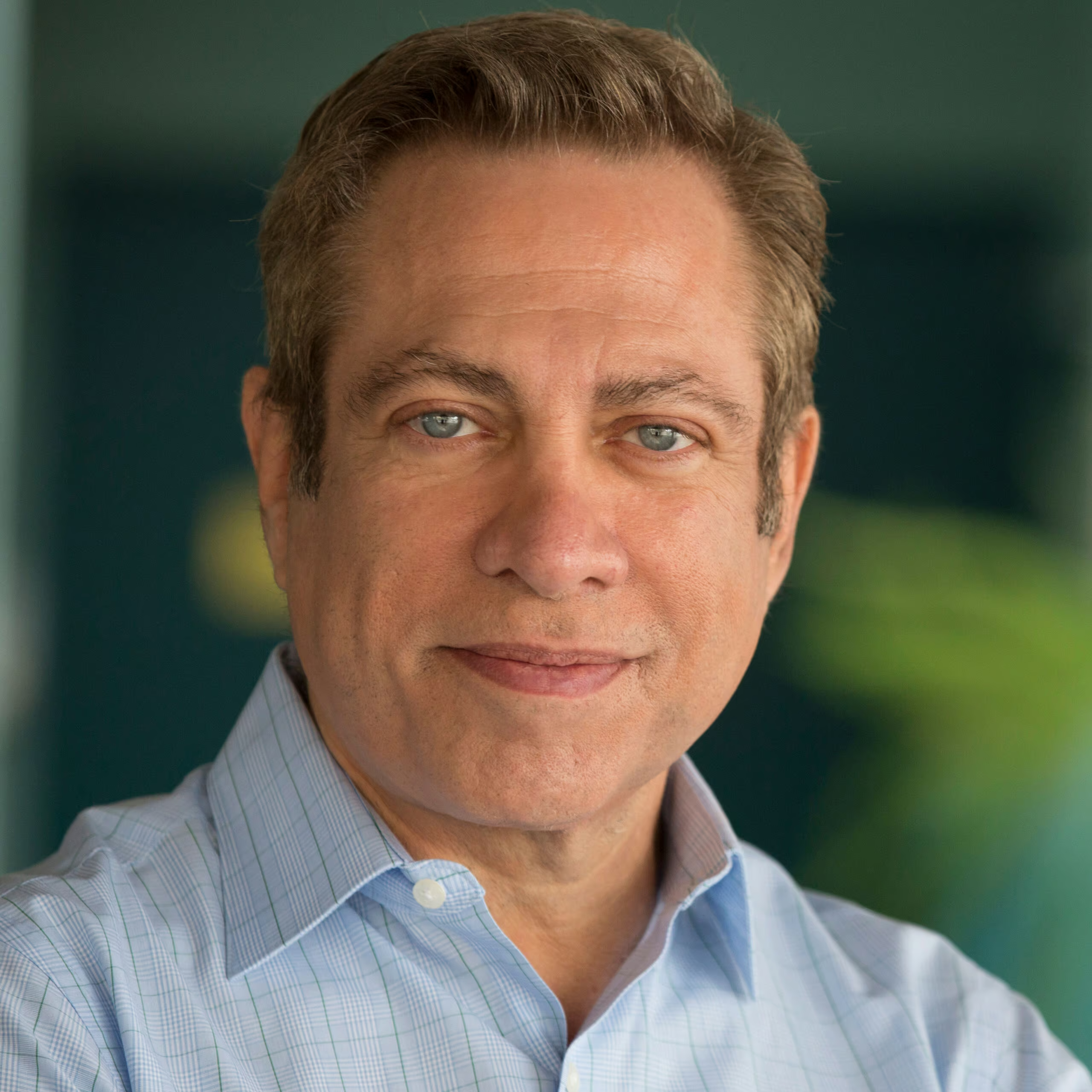

David Kessler, MA, RN, FACHE, is one of the world’s foremost experts on grief and the founder of Grief.com. He leads grief certification programs for professionals and online groups for those in grief. He’s the author of seven books, including Finding Meaning and his newest, Finding Meaning Workbook: Tools for Releasing Pain and Remembering with Love, as well as the coauthor of several books with Elisabeth Kübler-Ross and Louise Hay.
Speaker Disclosures:
Financial: David Kessler is the co‑founder and President Emeritus of Project Angel Food. He maintains employment relationships with HSBC – London and Tender Hearts Grief Support Group. He is a published author and receives royalties from his publications, as well as compensation for his work as a lecturer. In addition, David Kessler receives speaking honoraria and recording and book royalties from Psychotherapy Networker and PESI, Inc. He has no relevant financial relationships with ineligible organizations.
Non-financial: David Kessler has no relevant non-financial relationships.
We have a 100% satisfaction guarantee. If you are not satisfied, please contact us HERE. To request a copy of our full grievance policy, please email cepesi@pesi.com.
Yes, both in-person and virtual attendees will have the opportunity to ask or submit their questions live to get real expert responses. We will address as many questions as time allows.
No problem. Attend whatever sessions you are interested in. Please note that you can only receive CE credit for the sessions you attend live.
Volunteer registration will be opening in November. To add yourself to the waitlist and find out first when registration is available, click here.
Yes! While other conferences charge extra for CE, our registration passes include live CE hours as part of your ticket. After the event, an email will be sent to you that will explain how you will complete your electronic evaluation and access your certificate of completion. To view more information on CE, please visit: https://www.psychnetworker.org/continuing-education
The Symposium is taking place at the Omni Shoreham Hotel. Upon registering for the conference, make your reservation here to book a room at the Omni.
We love bringing in students and those new to the field to experience Symposium. To register as a student, check back in early November when registration opens for students. The registration system will ask for verification of student status.
Psychotherapy Networker is a non-profit educational organization. For over 49 years, we have featured the leading researchers, innovators, and developers in the field through our award-winning magazine, CE trainings, and our annual Symposium.
Our focus is on telling the stories of psychotherapy and being a place where clinicians of all licenses and backgrounds who practice psychotherapy can keep up on what's happening in the field, hear captivating stories from colleagues on what's really happening in their practices, learn through CE trainings from the best in the field, and enjoy the most celebrated annual gathering of psychotherapists in the world.
Earn extra CE, spend time in an intimate environment with speakers, have your meals covered, and enjoy some of the finest cuisine. Be sure to add at registration.
Visit the Psychotherapy Networker Exhibit Hall each day for exclusive opportunities to meet face-to-face with our field’s experts, win prizes, and to experience the latest products and services that will enhance your practice.
Located in one of DC's premier neighborhoods, the luxurious and historic Omni Shoreham is the ideal location to learn, unwind, be inspired, and build connection with your colleagues and yourself.

As many others are creating complicated barriers to cancellations, we're making it easier.
If at any time you aren't 100% completely satisfied with your experience, in person or as a virtual attendee, just email us at symposium@psychnetworker.org and speak with one of our friendly customer service representatives. We'll make it right, guaranteed. We're that confident you'll find this learning experience to be all that's promised and more.